Table of Contents
- IPTV vs satellite TV at a glance
- How each service reaches your television
- Installation: check the equipment you already own
- Picture quality: compare the source and the screen
- Sports and programme availability
- Compare the full cost over the same period
- Internet reliability, data use and bad weather
- Which option fits your household?
- Frequently asked questions
IPTV vs satellite TV comes down to how your household receives television, what you want to watch and which costs you are prepared to take on. Internet-delivered TV needs a dependable connection at the viewing device. Satellite television receives its broadcast signal through a dish and receiver, with internet access used for additional features on some packages.
If your broadband works well in the evening and you prefer watching across compatible devices, IPTV may suit your routine. If broadband is unreliable or heavily capped, satellite reception can be a better fit for live television. Compare actual packages before switching: neither delivery method guarantees every programme, the lowest price or the best picture.
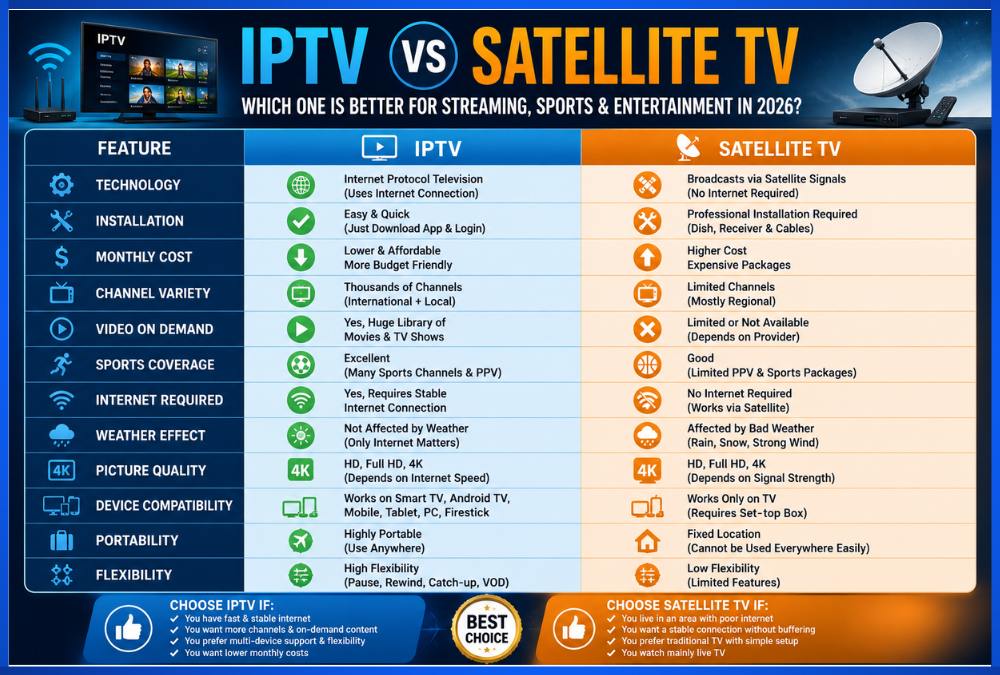
IPTV vs satellite TV at a glance
| What matters | IPTV | Satellite TV |
|---|---|---|
| Live TV delivery | Video travels over an IP network to a compatible device. | A dish receives a broadcast signal for a receiver or compatible television. |
| Home requirements | Suitable internet access, a supported player or receiver, and service access. | Suitable dish location, receiver and cabling; installation requirements vary. |
| Viewing during a broadband outage | Internet-delivered playback stops unless another connection is available. | Satellite-delivered channels can continue when power and satellite reception remain available. |
| Picture quality | Depends on source quality, encoding, connection and device. | Depends on source quality, broadcast encoding, receiver and reception. |
| Multiple screens | Check supported devices and simultaneous-stream limits. | Check extra receivers, app access and additional-screen charges. |
| Costs | Include the plan, player fees, hardware and any extra broadband cost. | Include the package, equipment, installation and any contract charges. |
How each service reaches your television
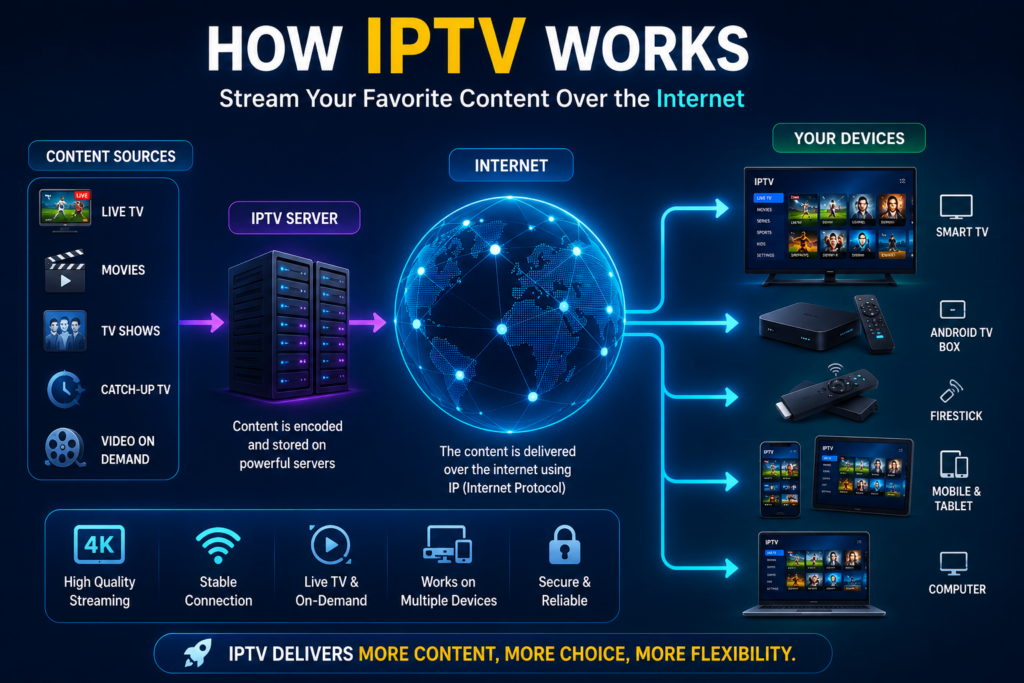
With internet-delivered TV, your player requests a stream and receives video data over the network. The app decodes it for your screen. Live TV, on-demand programmes and catch-up may be offered, but the available features depend on the service and player. For the underlying technology, read our beginner’s guide to IPTV.
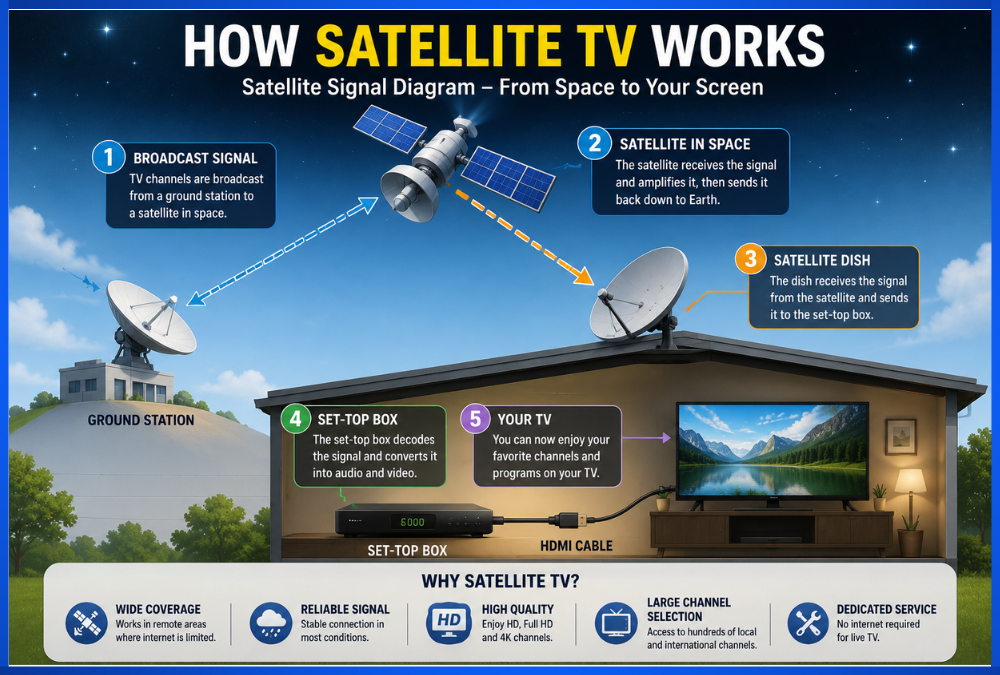
Satellite television follows a different path: the broadcast travels to a satellite, then to your dish, receiver and screen. A clear reception path and correctly installed equipment matter. Some satellite packages also offer internet-delivered apps or on-demand viewing, so a subscription can combine both methods.
Installation: check the equipment you already own
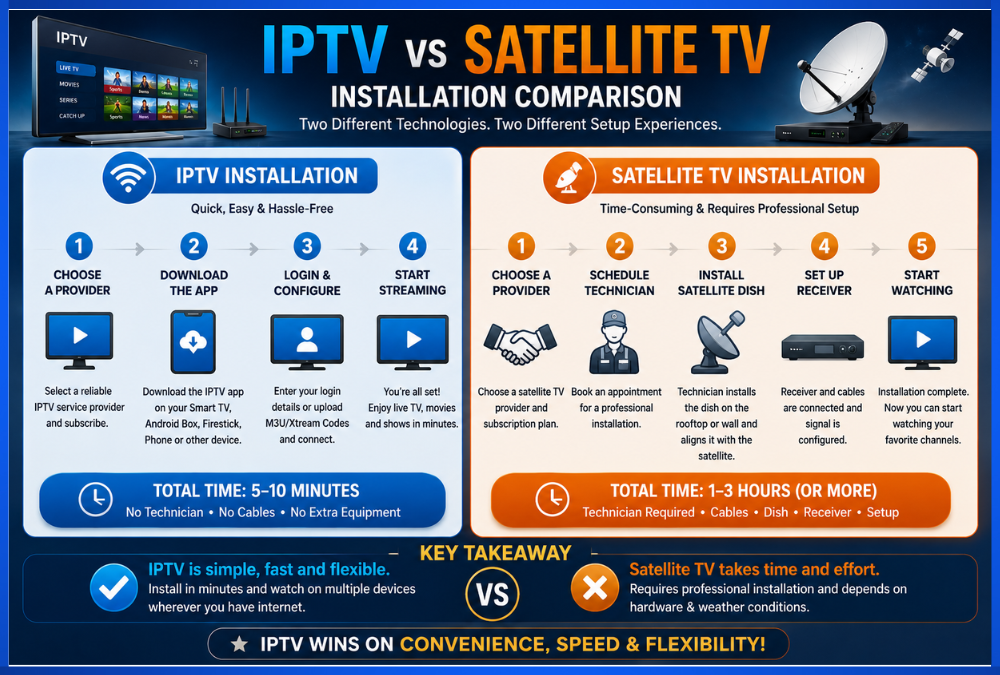
For IPTV, identify your exact television or streaming-device model before choosing an app. Confirm whether the service supplies an M3U playlist, an account login or another supported access method. A player purchase and a television subscription may be separate payments. Our Smart TV setup guide explains the main device checks.
For satellite, ask the installer whether the property has a suitable dish position, usable cabling and the required permissions. Check installation and receiver charges in the written offer. Existing equipment is useful only if it is compatible with the package you choose.
Picture quality: compare the source and the screen
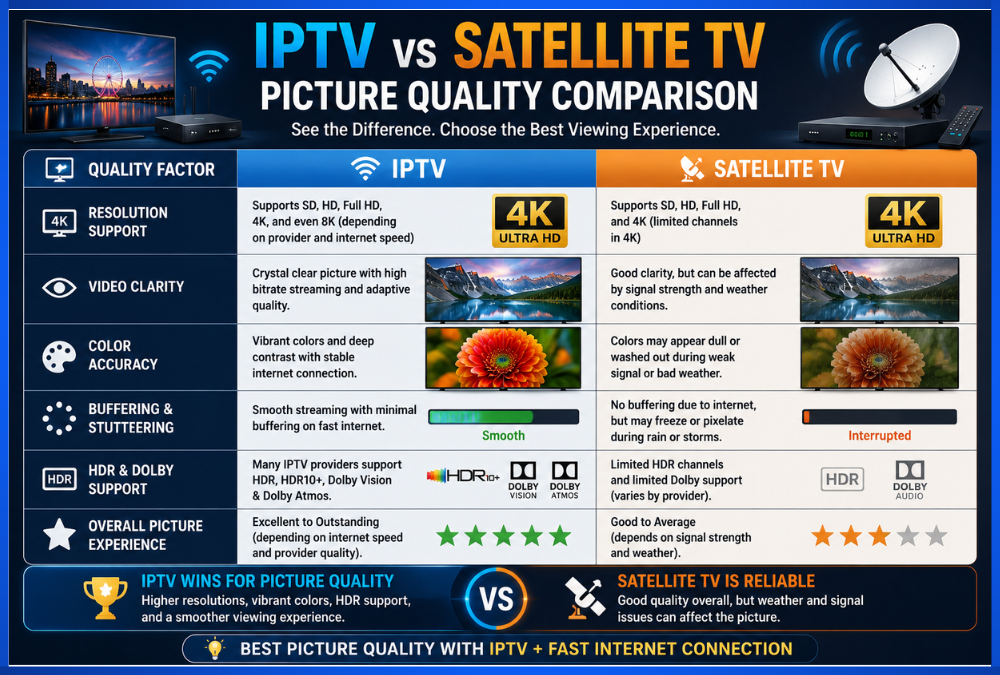
A 4K television does not turn an HD broadcast into a native 4K source. With either delivery method, check which programmes are actually supplied in the advertised resolution and whether your device supports the required format. Compression, frame rate and the original recording also affect what you see.
For internet-delivered TV, test playback on the device and connection you will normally use. A speed test beside the router can miss a weak Wi-Fi connection at the television. For satellite, reception problems can cause picture breakup or interruptions; a larger internet package will not repair a misaligned dish.
Sports and programme availability
Make a short list of the events, programmes and languages your household watches. Ask each provider to confirm availability in your location and on the specific package. Check live access, replay availability, recording restrictions and any separate event charges. A large advertised catalogue does not answer those questions.
If live sports are a priority, assess evening playback and the programme guide before committing to a long subscription. Live delay can differ between services and devices; do not assume one delivery method always shows an event first.
Compare the full cost over the same period
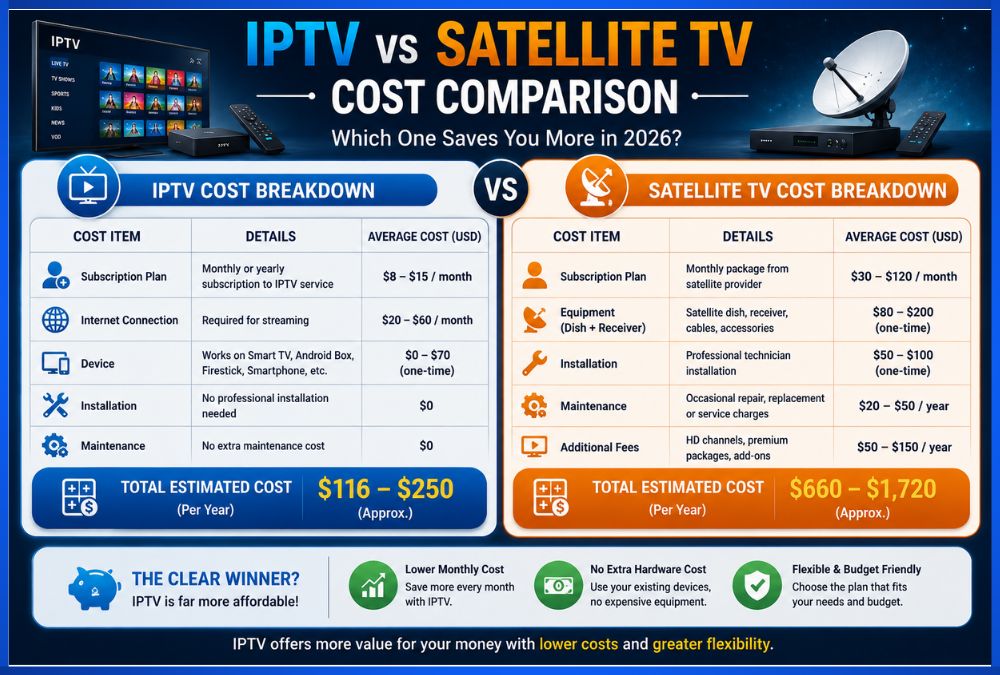
Use the same comparison period for both offers, such as the first twelve months. Add the subscription payments, installation, equipment, app fees, extra-screen charges and any broadband upgrade needed specifically for viewing. Subtract a broadband cost only if you would actually stop paying it after switching.
Check what happens when an introductory offer ends and whether cancellation, equipment return or renewal terms add costs. An annual price divided by twelve is a monthly equivalent, not necessarily a monthly payment option. For Smartiflix’s published offers, use the plans and pricing page and check the final checkout total.
Internet reliability, data use and bad weather
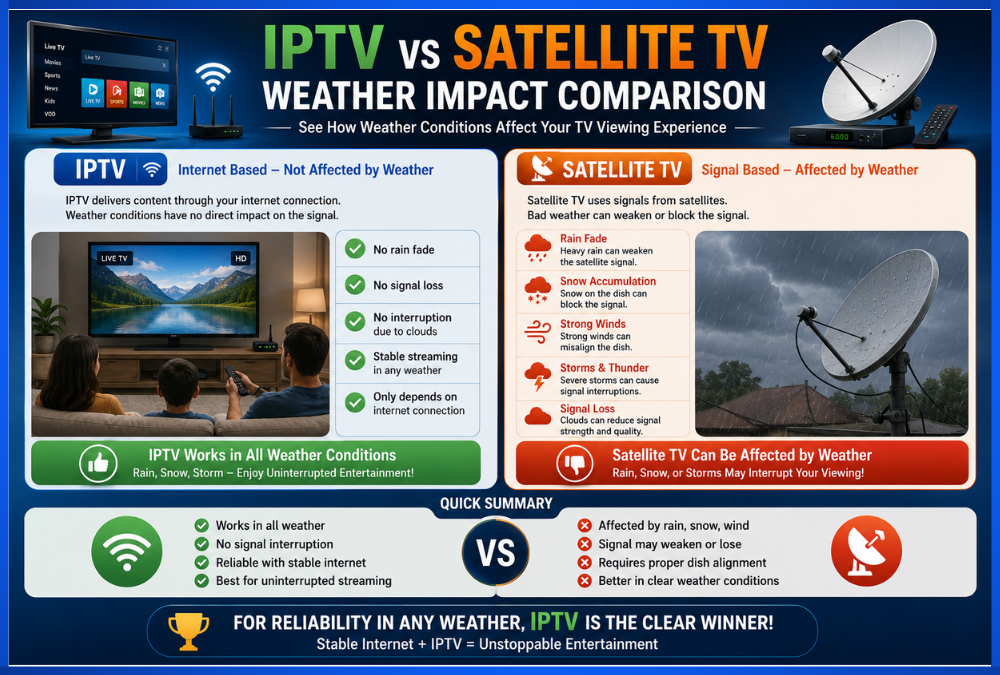
There is no single broadband speed that guarantees every IPTV stream. The stream’s bitrate, the number of simultaneous viewers and other household activity all matter. As an example of service-specific requirements, Netflix publishes its own speed recommendations; these should not be treated as universal requirements for another provider. Our IPTV internet-speed guide explains how to assess household demand.
Satellite reception can be interrupted by severe weather. DIRECTV’s signal-loss guidance describes this risk, while its viewing alternatives during interference include broadband options where available. Those alternatives have their own connection and equipment requirements.
IPTV is not weatherproof: it still depends on electricity, your broadband provider and the connection into your home. A storm-related power or broadband outage can interrupt internet viewing even though there is no television dish.
Which option fits your household?
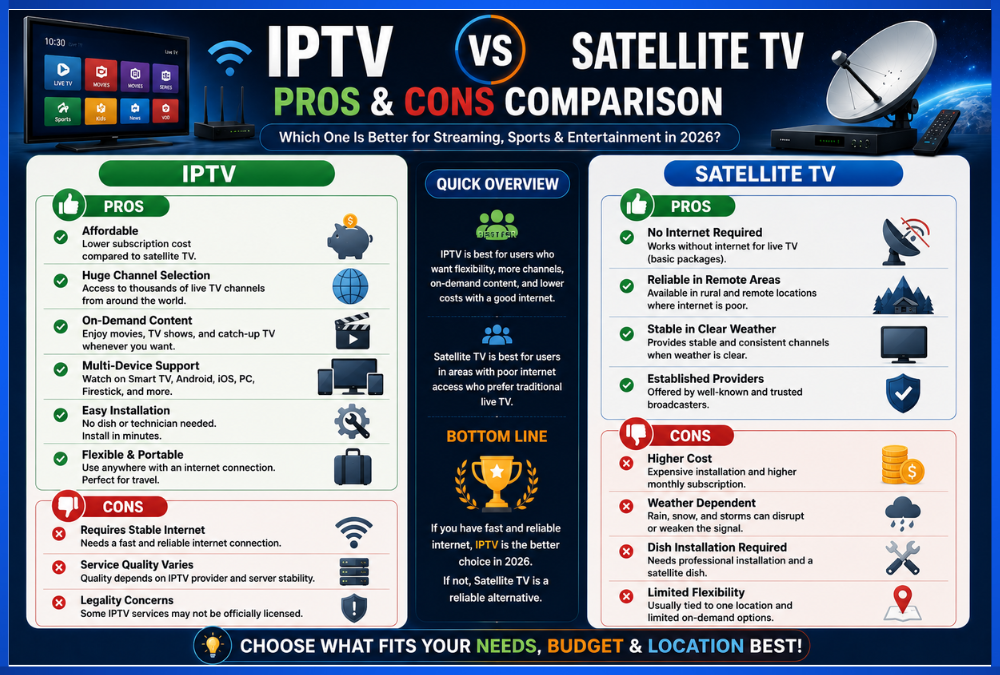
Consider IPTV if your connection is dependable where you watch, your preferred devices are supported and you value app-based viewing. Verify the total price and the number of screens that can play at the same time.
Consider satellite TV if you mainly watch live television at home, broadband is a limiting factor and your property can support the installation. Confirm that the package includes your required programmes and that its contract suits you.
Before cancelling an existing service, test the replacement, check the written terms and record any notice period. Changing delivery technology should solve a real household need: a lower total bill, better device access or a more suitable package.
Frequently asked questions
Does satellite TV always need internet?
Satellite-delivered broadcasts do not inherently need a home internet connection. Apps, on-demand viewing and some additional receiver features may require one; check the package.
Can IPTV work without a satellite dish?
Yes. Internet-delivered IPTV uses the network connection and a supported device, so a satellite television dish is not required.
Is IPTV always cheaper?
No. Compare the full bill, including player fees, hardware, connection allowances and any additional broadband costs, against the actual satellite offer.
Can I keep satellite and try IPTV?
You can use both where the services, equipment and terms allow it. Testing a short subscription before changing your main package can help you assess everyday viewing.
Have a question about Smartiflix compatibility? Contact support with your device model and viewing requirements before choosing a plan.

Last updated on October 4, 2026 at 4:34 pm