
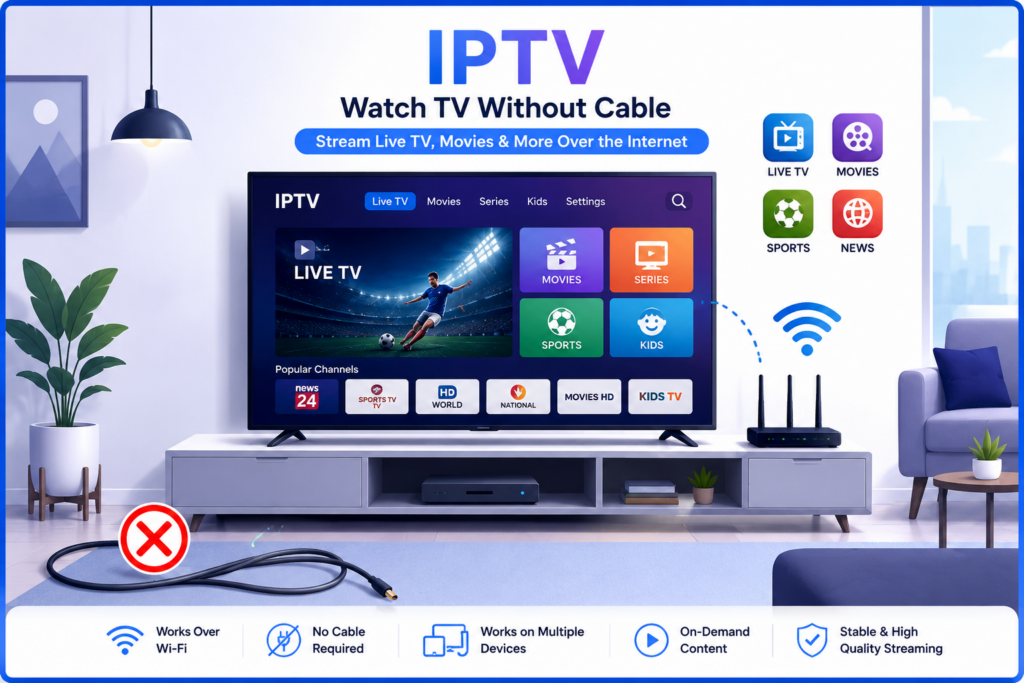
The way people watch television has changed dramatically over the past decade. Traditional cable TV is no longer the only option for enjoying live channels, sports, movies, and TV shows. Thanks to modern internet technology, millions of people are switching to IPTV as a more flexible and affordable alternative.
But one question still comes up frequently:
Can you watch IPTV without cable?
The simple answer is yes.
Unlike traditional television services, IPTV doesn't require coaxial cables, satellite dishes, or cable TV subscriptions. Instead, it uses your internet connection to deliver television content directly to your device.
In this guide, we'll explain how IPTV works without cable, what equipment you need, its advantages and disadvantages, and whether it's the right choice for your home.
What Is IPTV?
IPTV (Internet Protocol Television) is a technology that delivers television programming through the internet rather than through traditional cable or satellite networks.
Instead of receiving TV signals via physical cables connected to your home, IPTV streams digital video over your broadband internet connection.
This allows you to watch:
- Live TV channels
- Movies
- TV series
- Sports events
- News
- On-demand content
- Catch-up TV
Because everything is transmitted online, a cable TV connection is unnecessary.
How IPTV Works Without Cable
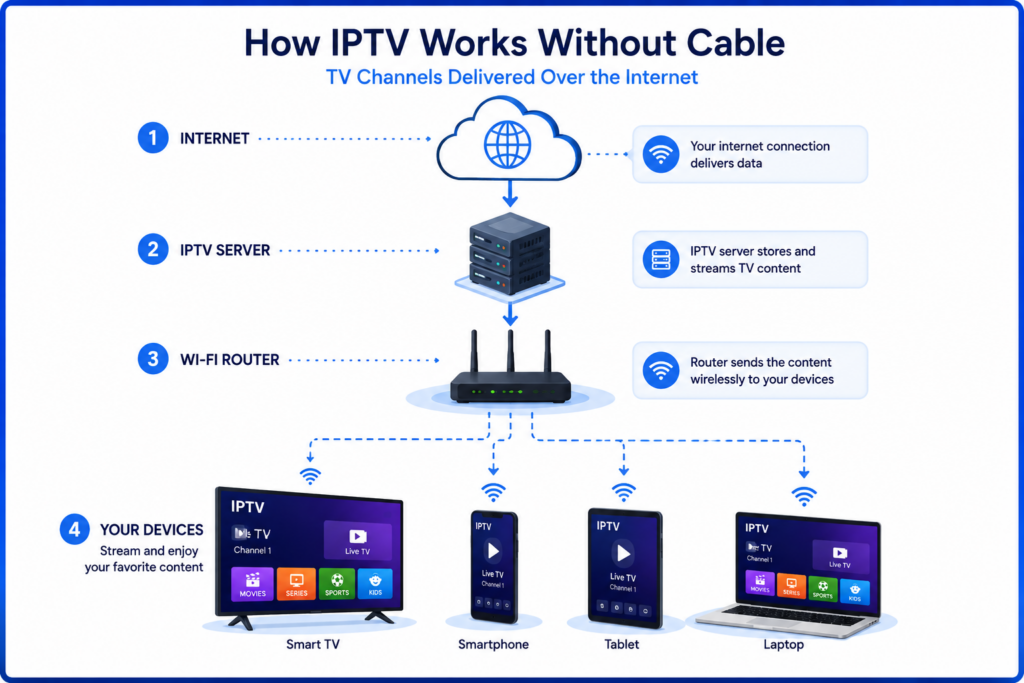
Traditional cable TV relies on dedicated infrastructure installed by cable providers.
IPTV works differently.
The process is simple:
- TV content is stored on IPTV servers.
- Your internet service provider (ISP) delivers internet access.
- Your IPTV application connects to the IPTV server.
- The selected content is streamed directly to your device.
As long as your internet connection is stable, your device can play television content without any cable TV service.
What Do You Need to Watch IPTV Without Cable?
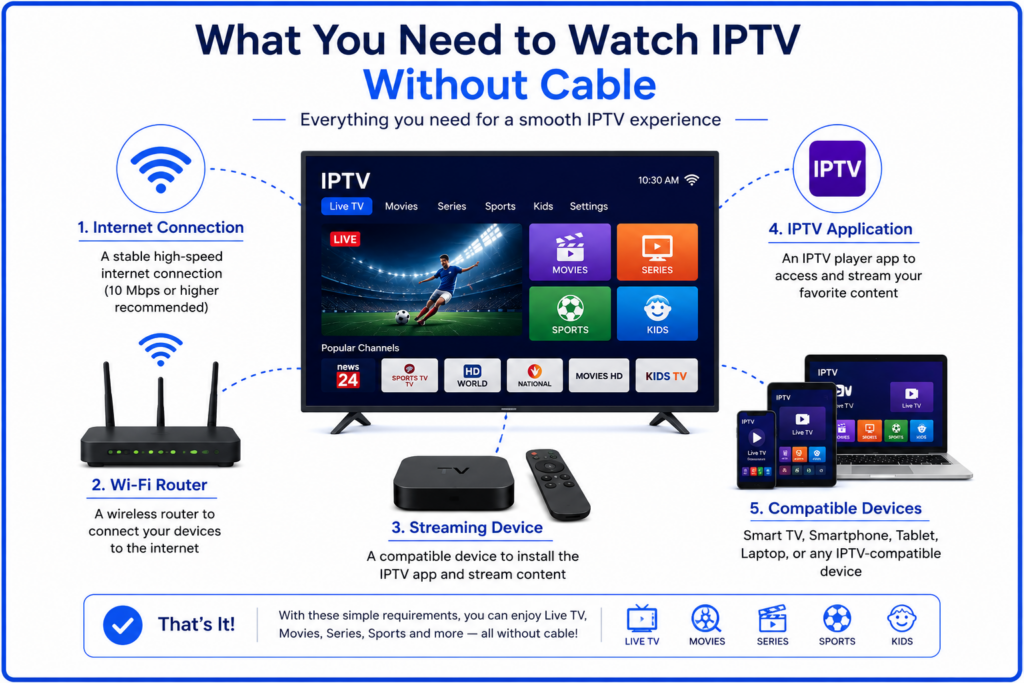
One of IPTV's biggest advantages is that it requires very little equipment.
Here's what you'll need.
1. A Reliable Internet Connection
Since IPTV uses the internet instead of cable, your internet speed is the most important factor.
Recommended speeds:
| Video Quality | Recommended Speed |
| SD | 5 Mbps |
| HD | 10 Mbps |
| Full HD | 20 Mbps |
| 4K UHD | 25–50 Mbps |
If multiple people are streaming simultaneously, higher speeds are recommended.
2. An IPTV-Compatible Device
You can watch IPTV on many devices, including:
- Smart TVs
- Android TV
- Amazon Fire TV Stick
- Android TV Boxes
- Apple TV
- Smartphones
- Tablets
- Windows PCs
- Mac computers
- Laptops
This flexibility makes IPTV more convenient than traditional cable.
3. IPTV Application
You'll also need an IPTV player or application.
Popular IPTV players include:
- IPTV Smarters Pro
- TiviMate
- Smart IPTV
- XCIPTV
- GSE Smart IPTV
- Perfect Player
These apps allow you to load IPTV playlists or portal credentials provided by your IPTV service.
4. IPTV Subscription (If Required)
Most live IPTV services require a subscription.
After subscribing, you'll usually receive:
- M3U playlist URL
- Xtream Codes login
- Portal URL
You simply enter these details into your IPTV app to begin watching.
Can You Use Wi-Fi Instead of Cable?
Absolutely.
Most users stream IPTV over Wi-Fi.
As long as your wireless connection is stable, IPTV works perfectly without any physical television cable.
For the best experience:
- Use a dual-band router.
- Prefer the 5 GHz Wi-Fi band.
- Place the router near your streaming device.
- Restart your router occasionally.
- Reduce interference from other wireless devices.
If your Wi-Fi signal is weak, using an Ethernet cable between your router and streaming device can provide a more stable connection.
Advantages of Watching IPTV Without Cable
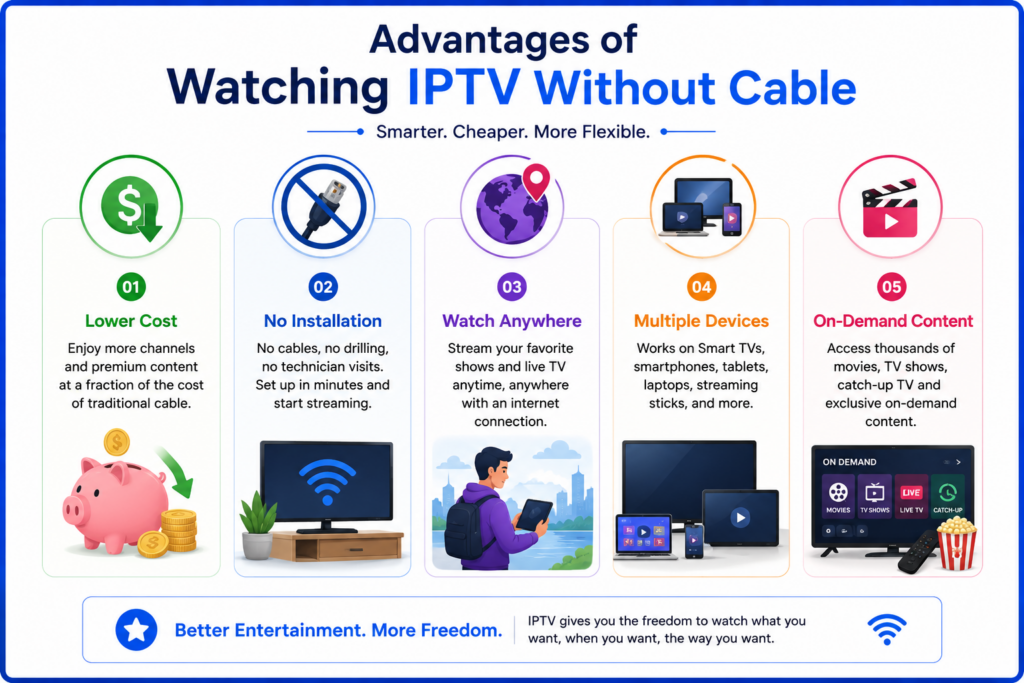
Switching from cable TV to IPTV offers several benefits.
Lower Monthly Costs
Cable TV packages are often expensive.
Many IPTV services provide more channels and features at a lower monthly cost.
No Installation Required
There's no need for:
- Cable installation
- Satellite dish installation
- Technician appointments
- Wall drilling
Most users can set up IPTV in just a few minutes.
Watch Anywhere
Because IPTV uses the internet, you can watch content wherever you have a reliable internet connection.
Whether you're at home, traveling, or staying in a hotel, IPTV offers greater flexibility than traditional cable.
More Device Options
Unlike cable boxes, IPTV works across multiple devices.
You can start watching on your Smart TV and continue on your smartphone or tablet.
On-Demand Entertainment
Many IPTV services include:
- Movies
- TV shows
- Catch-up TV
- Video-on-demand (VOD)
This gives viewers more control over what they watch and when they watch it.
Are There Any Limitations?
Although IPTV offers many advantages, it's not perfect.
Internet Dependency
Without internet access, IPTV won't work.
Cable TV can continue functioning during internet outages, but IPTV cannot.
Buffering
Slow internet speeds or unstable Wi-Fi may cause:
- Buffering
- Freezing
- Reduced video quality
A stable broadband connection helps minimize these issues.
Service Quality Varies
Not all IPTV providers offer the same level of reliability.
Some provide:
- Better uptime
- Faster servers
- Higher video quality
- More responsive customer support
Choosing a reputable provider can make a significant difference.
Is IPTV Better Than Cable?
The answer depends on your needs.
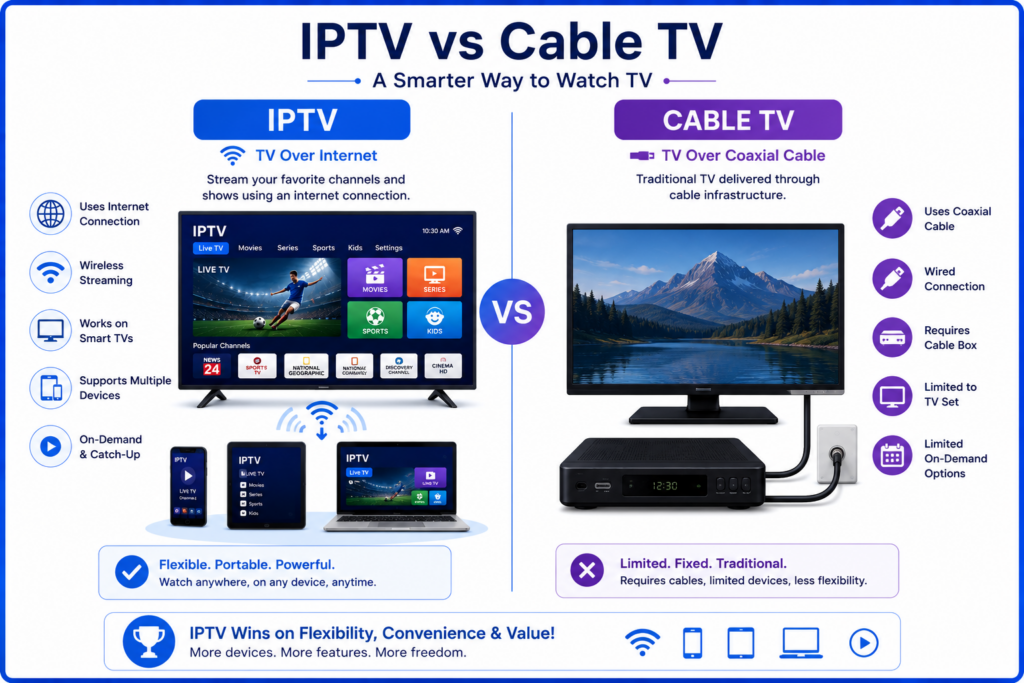
| IPTV | Cable TV |
| Uses internet | Uses cable infrastructure |
| No cable installation | Requires cable installation |
| Works on multiple devices | Often limited to cable boxes |
| More flexible | Less flexible |
| Usually more affordable | Often more expensive |
| Portable | Usually home-based |
| Requires internet | Can work without internet |
For many households with reliable broadband, IPTV is a practical alternative to traditional cable.
Is IPTV Legal Without Cable?
Using IPTV without cable is completely legal when the IPTV service has the proper rights and licenses to distribute the content.
Many legitimate providers deliver television channels and on-demand programming over the internet.
However, some unauthorized IPTV services distribute copyrighted content without permission, which may violate copyright laws depending on your country. Before subscribing, check that the provider operates legally and complies with applicable regulations.
Tips for the Best IPTV Experience
To enjoy smooth streaming:
- Use high-speed broadband internet.
- Choose a reliable IPTV provider.
- Keep your IPTV app updated.
- Use modern streaming devices.
- Restart your router occasionally.
- Use Ethernet for maximum stability when possible.
- Avoid running many bandwidth-heavy activities during streaming.
Frequently Asked Questions (FAQs)
Can I watch IPTV without cable TV?
Yes. IPTV only requires an internet connection and a compatible device. A cable TV subscription is not needed.
Does IPTV require satellite service?
No. IPTV works entirely over the internet and does not require a satellite dish.
Can I watch IPTV using Wi-Fi?
Yes. Most users stream IPTV over Wi-Fi, although a wired Ethernet connection may offer greater stability.
Is internet speed important for IPTV?
Yes. Faster and more stable internet connections generally provide smoother playback and reduce buffering.
Can I use IPTV on multiple devices?
Many IPTV services support multiple compatible devices, though the number of simultaneous streams depends on your subscription.
Final Thoughts
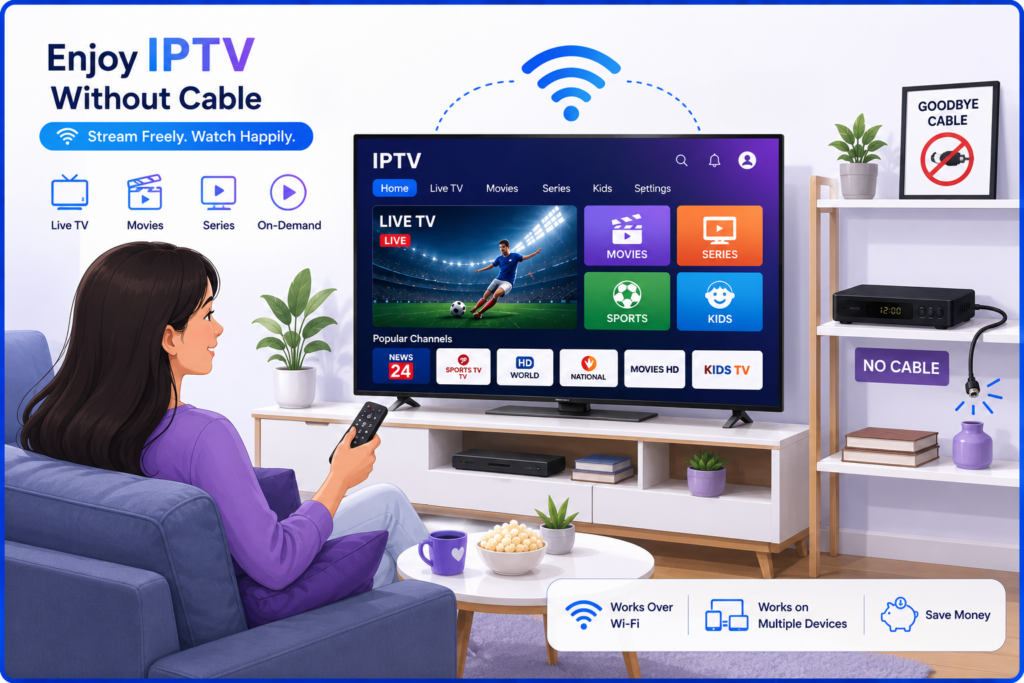
The answer to “Can you watch IPTV without cable?” is a clear yes.
IPTV has transformed television by allowing viewers to stream live channels and on-demand content directly over the internet. With a reliable internet connection, a compatible device, and access to a legitimate IPTV service, you can enjoy a flexible viewing experience without relying on traditional cable infrastructure.
For households looking to reduce costs, watch on multiple devices, and access entertainment from almost anywhere, IPTV can be an excellent alternative to conventional cable TV. Just remember that your experience depends on the quality of your internet connection and the legitimacy of the IPTV provider you choose.