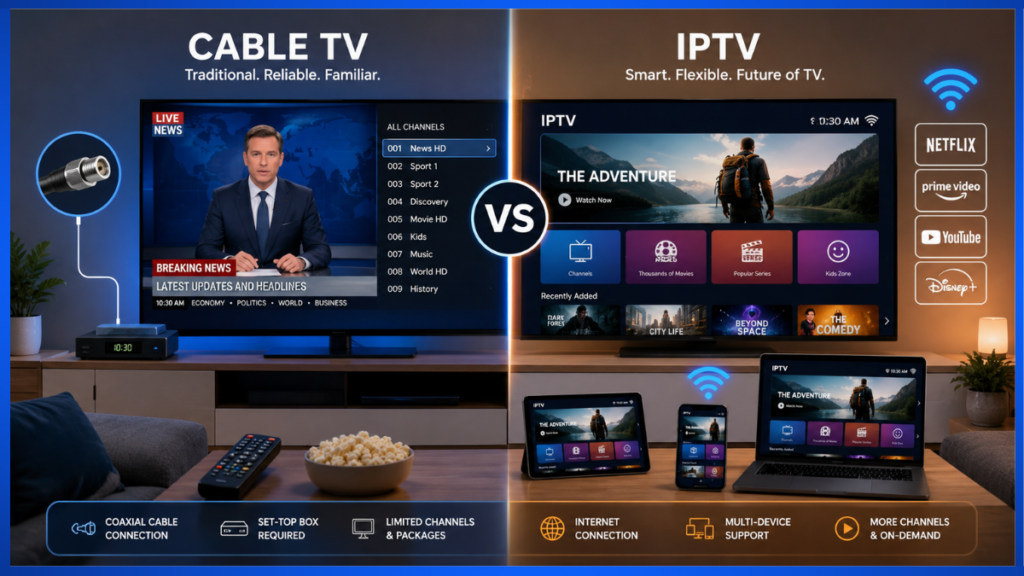
Television has changed dramatically over the past decade. Traditional cable TV, once the dominant entertainment source, is now facing serious competition from IPTV (Internet Protocol Television). More people are switching to internet-based streaming because it offers greater flexibility, lower costs, and more features.
But does that mean IPTV is always the better option?
Not necessarily.
Both IPTV and Cable TV have strengths and weaknesses depending on your budget, internet connection, viewing habits, and location.
In this complete guide, we'll compare IPTV vs Cable TV in every important category so you can confidently choose the right option for your home.
What Is IPTV?
IPTV (Internet Protocol Television) delivers television content through an internet connection instead of traditional cable wires.
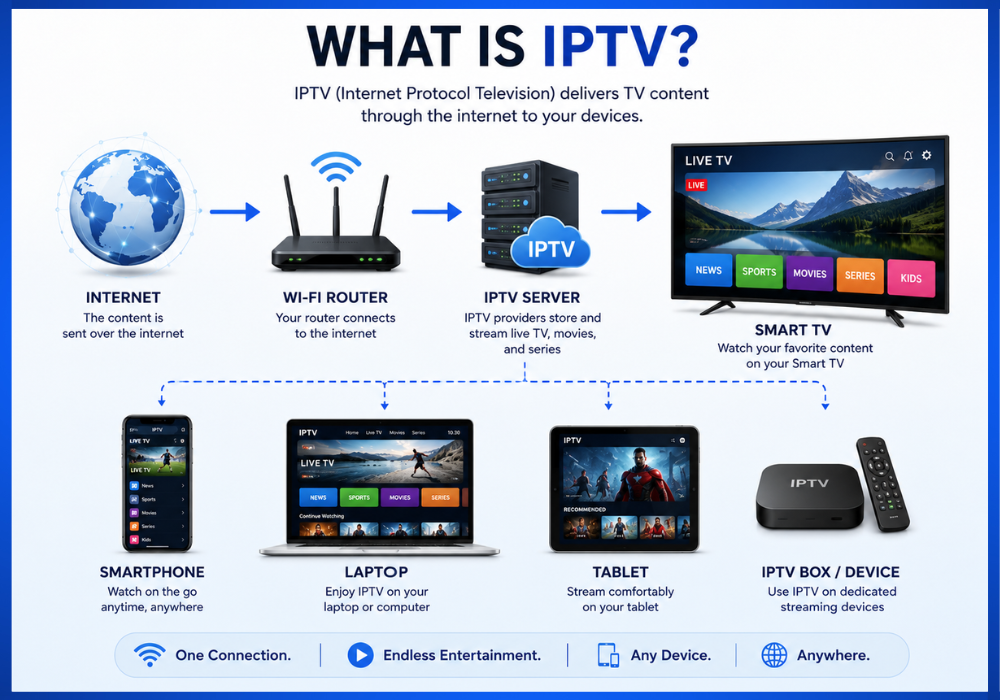
Instead of receiving broadcasts through coaxial cables, IPTV streams channels, movies, and TV shows over broadband internet.
Typical IPTV services include:
- Live TV channels
- Movies on Demand (VOD)
- TV Series
- Catch-up TV
- Cloud DVR
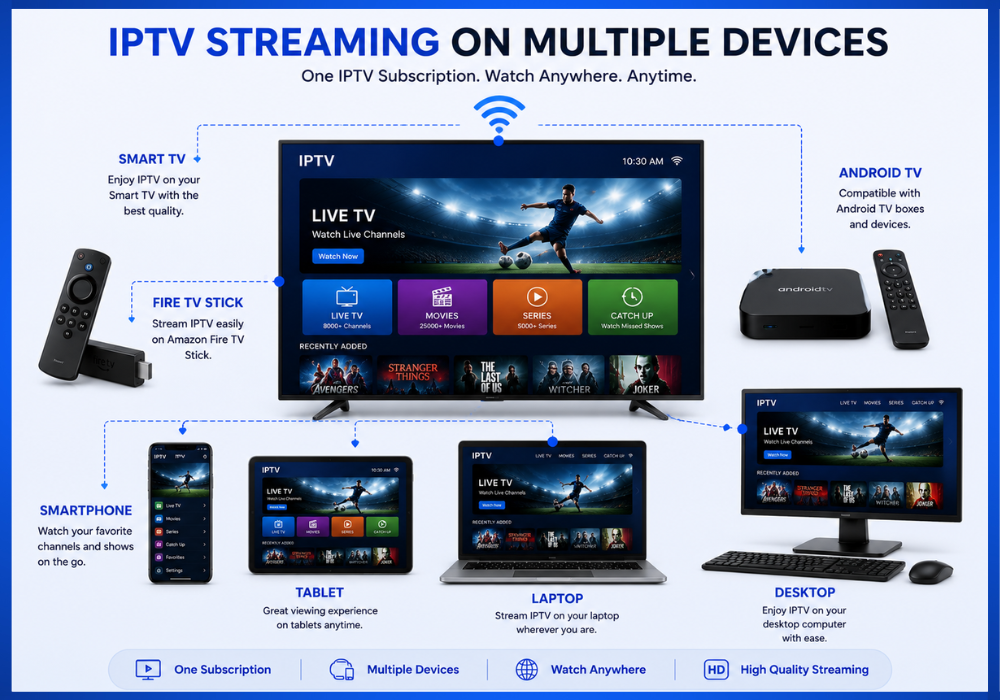
- Multi-device streaming
All you need is:
- Stable internet
- IPTV app
- IPTV subscription
- Compatible device (Smart TV, Firestick, Android TV, PC, smartphone, etc.)
What Is Cable TV?
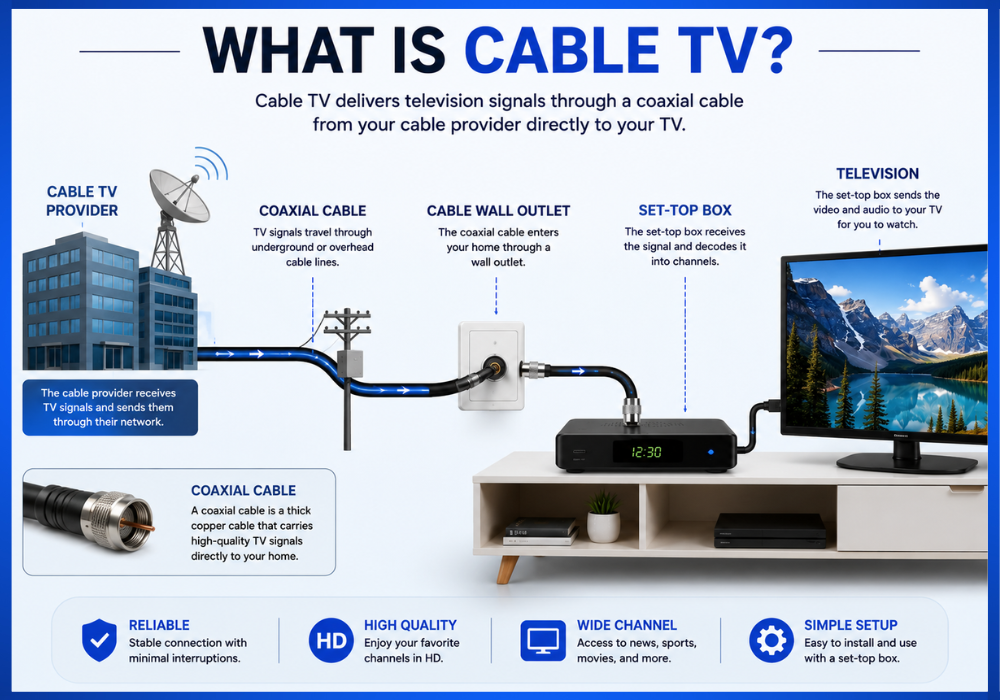
Cable TV delivers television signals using physical coaxial cables installed by local cable providers.
The provider sends channels directly through underground or overhead cable networks into your home.
Cable TV usually includes:
- Local channels
- Sports
- News
- Entertainment
- Premium channel packages
Cable television has been the standard choice for decades because it's reliable and easy to use.
IPTV vs Cable TV: Quick Comparison
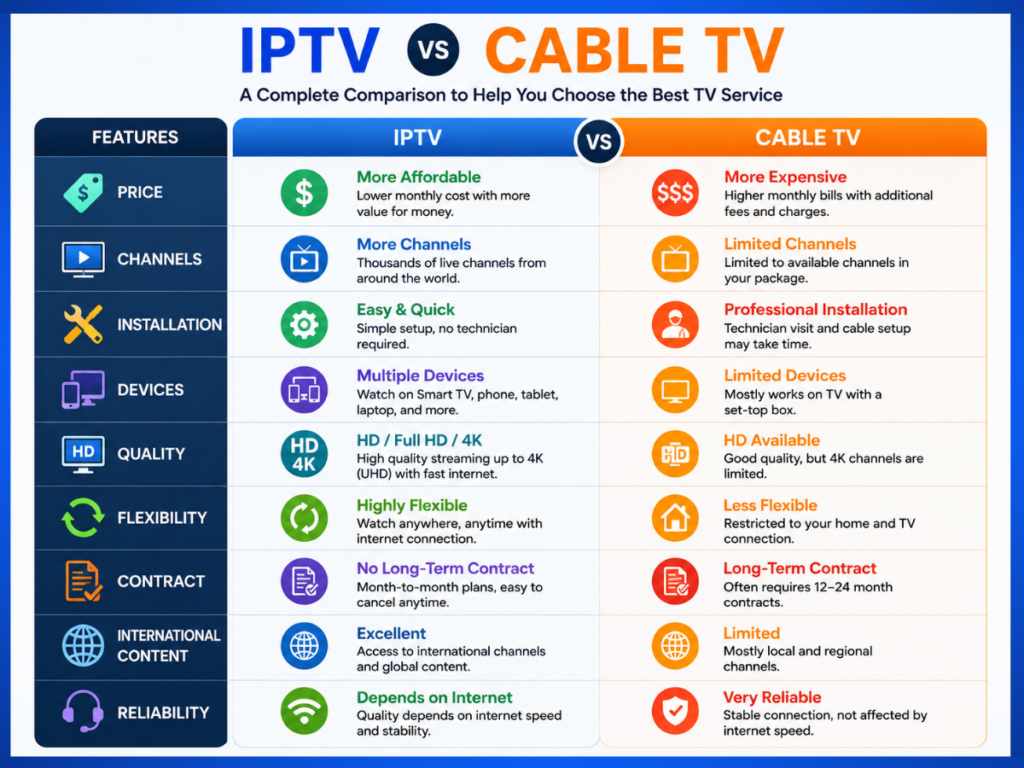
Feature IPTV Cable TV
Technology- Internet Streaming- Coaxial Cable
Installation- Very Easy- Professional Installation Often Required
Monthly Cost- Lower- Higher
Channel Variety- Very Large- Limited by Package
Video On Demand- Usually Included- Limited
Device Support- Multiple Devices- Mostly Television
International Channels- Excellent- Limited
Contract Required- Usually No- Often Yes
Picture Quality- HD / Full HD / 4K- HD Available
Mobility- Watch Anywhere- Mostly Home Only
- Installation Process
IPTV
Setting up IPTV usually takes only a few minutes.
Steps:
- Install IPTV app
- Enter login credentials or playlist
- Start streaming
No technician is required.
Cable TV
Cable TV often requires:
- Technician appointment
- Cable installation
- Set-top box
- Wiring
Installation can take several days depending on the provider.
Winner: IPTV
- Cost Comparison
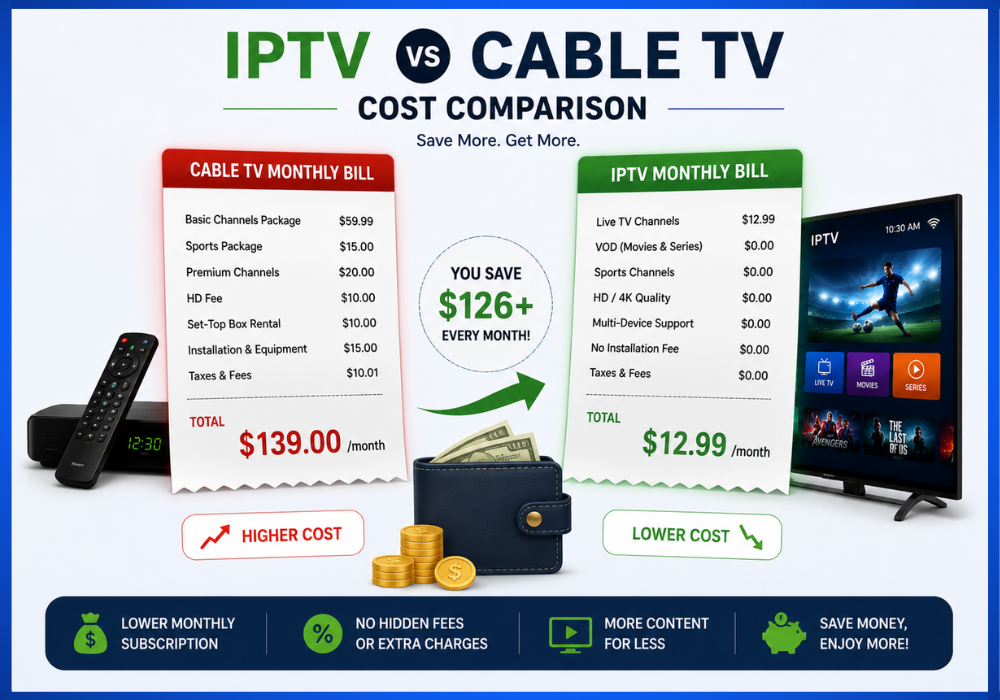
One of IPTV's biggest advantages is affordability.
IPTV
Usually includes:
- Thousands of channels
- Movies
- Sports
- International content
- Video On Demand
…for a relatively low monthly subscription.
Cable TV Monthly bills can become expensive because of:
- Equipment rental
- Installation fees
- Premium channels
- Hidden taxes
- Long-term contracts
Winner: IPTV
- Channel Selection
IPTV
Many IPTV services provide:
- Thousands of live channels
- Worldwide sports
- International news
- Entertainment
- Kids channels
- Documentaries
- Regional content
Cable TV
Cable providers usually offer channel packages.
To access additional channels, customers often need to upgrade to more expensive plans.
Winner: IPTV
- Video On Demand (VOD)
Modern viewers don't always want to watch content according to TV schedules.
IPTV
Most IPTV providers include:
- Thousands of movies
- Complete TV series
- New releases
- Catch-up TV
Cable TV
Cable providers may offer On Demand services, but libraries are often smaller and may require extra fees.
Winner: IPTV
- Picture Quality
Both technologies now support excellent video quality.
IPTV
Depending on internet speed:
- HD
- Full HD
- 4K
- Sometimes 8K-ready content
Cable TV
Offers:
- SD
- HD
- Limited 4K channels
Cable quality remains stable because it doesn't rely on internet speed.
Winner: Tie
- Reliability
IPTV
Performance depends on:
- Internet speed
- Server quality
- Home network
Poor internet can cause:
- Buffering
- Lag
- Temporary interruptions
Cable TV
Cable is generally very stable.
Unless there's physical cable damage or a provider outage, service remains consistent.
Winner: Cable TV
- Flexibility
IPTV
Watch content on:
- Smart TVs
- Android TV
- Firestick
- Smartphones
- Tablets
- PCs
- Laptops
Many services also allow streaming on multiple devices.
Cable TV
Usually limited to:
- Television
- Set-top box
Watching on mobile devices often requires additional apps or subscriptions.
Winner: IPTV
- International Channels
IPTV excels in global entertainment.
You can often access channels from:
- USA
- UK
- Canada
- Europe
- Middle East
- Asia
- Africa
- Latin America
Cable providers generally focus on local markets.
Winner: IPTV
- Sports Coverage
Sports fans often compare IPTV vs Cable TV carefully.
IPTV
May include:
- Premier League
- NFL
- NBA
- NHL
- UFC
- Formula 1
- Cricket
- Boxing
- Tennis
Availability depends on the provider and licensing.
Cable TV
Major sports are usually available through premium packages.
Extra sports channels often increase monthly costs.
Winner: IPTV (for variety)
- Contracts
IPTV
Many IPTV providers offer:
- Monthly subscriptions
- No contracts
- Easy cancellation
Cable TV
Many providers require:
- 12–24 month contracts
- Early termination fees
Winner: IPTV
Advantages of IPTV
✔ Lower monthly cost
✔ More channels
✔ On-demand movies
✔ International content
✔ Multiple device support
✔ Easy setup
✔ Portable
✔ Flexible subscriptions
Advantages of Cable TV
✔ Stable connection
✔ Reliable during internet issues
✔ Simple for less tech-savvy users
✔ Consistent local channels
✔ Professional customer support
IPTV vs Cable TV: Pros and Cons
IPTV Cable TV
Lower cost Higher cost
Huge content library Limited packages
Internet required No internet needed for TV
Portable Mostly home use
Flexible Less flexible
Can buffer on slow internet Very reliable
Which One Is Better?
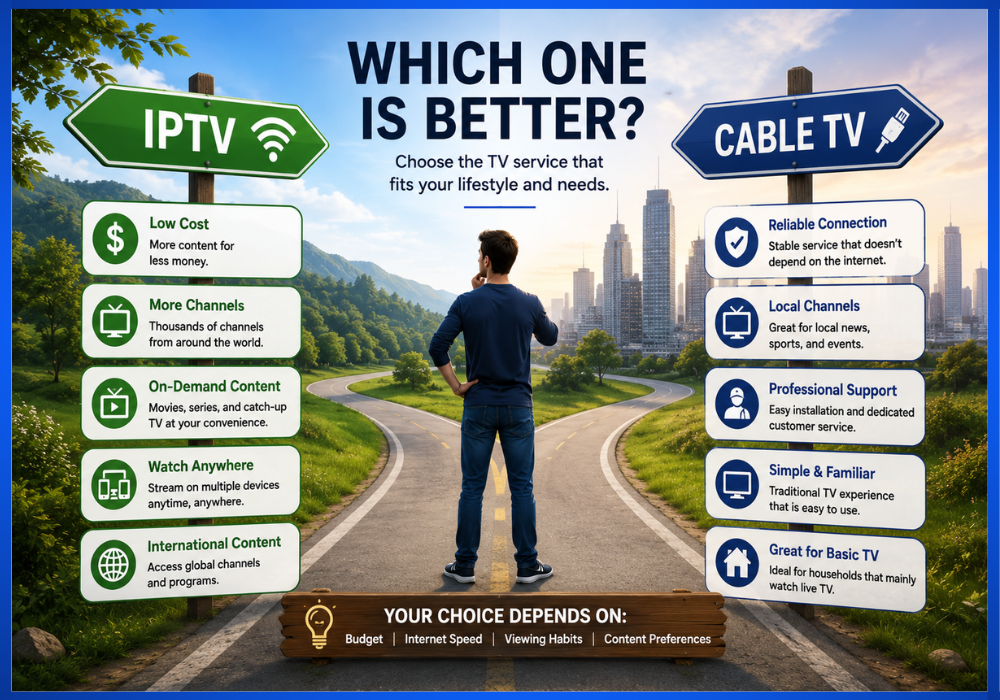
Choose IPTV if you:
- Want to save money
- Prefer thousands of channels
- Love streaming movies and TV shows
- Need international content
- Watch TV on multiple devices
- Have a fast, stable internet connection
Choose Cable TV if you:
- Prefer a highly reliable service
- Primarily watch local channels
- Have limited or unreliable internet access
- Want a traditional, plug-and-play TV experience
Frequently Asked Questions (FAQ)
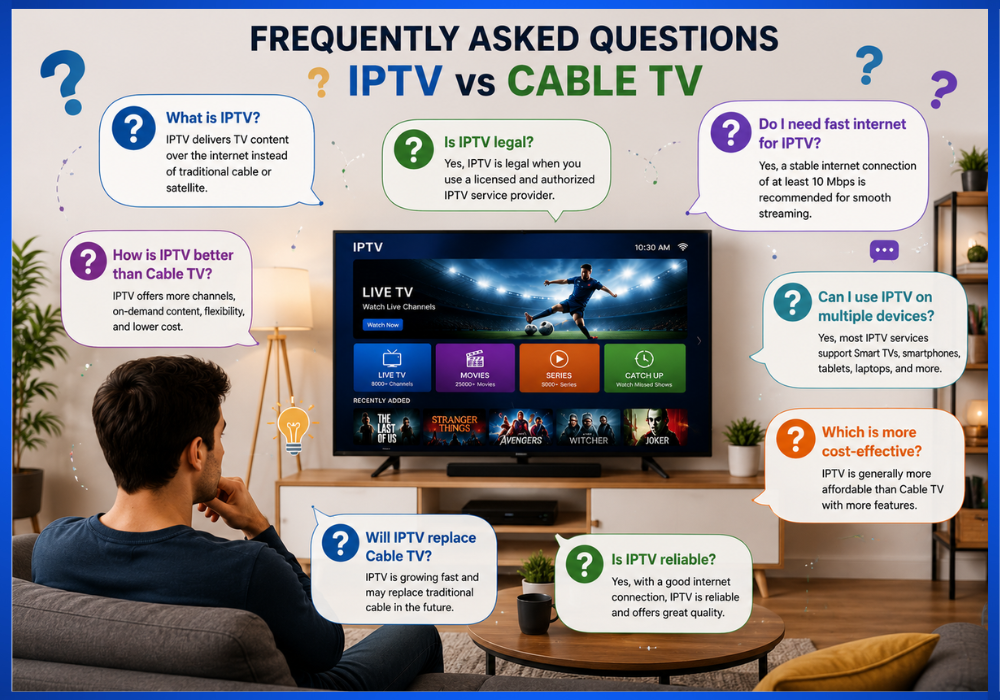
Is IPTV cheaper than Cable TV?
In many cases, yes. IPTV subscriptions are often more affordable and include a wider range of content, though prices and offerings vary by provider.
Does IPTV require the internet?
Yes. IPTV streams content over an internet connection, so reliable broadband is essential.
Can IPTV replace Cable TV?
For many households, IPTV can replace Cable TV if the internet connection is fast and dependable. Others may prefer cable for its consistency and local channel availability.
Which has better picture quality?
Both can deliver excellent HD and 4K quality. IPTV quality depends on internet speed, while Cable TV is generally more consistent.
Is IPTV legal?
IPTV technology itself is completely legal. However, legality depends on whether the service provider has the proper rights to distribute the content. Always choose legitimate, licensed IPTV providers.
Final Verdict
When comparing IPTV vs Cable TV, IPTV stands out for its affordability, flexibility, extensive content library, and ability to stream across multiple devices. It's an excellent choice for users who enjoy on-demand entertainment and have a reliable internet connection.
Cable TV, on the other hand, remains a dependable option for viewers who value consistent service, local programming, and a traditional television experience without relying on internet performance.
Ultimately, the best choice depends on your viewing habits, budget, and internet quality. If you prioritize convenience and variety, IPTV is likely the better fit. If reliability and simplicity are your top concerns, Cable TV still offers significant value.