Introduction
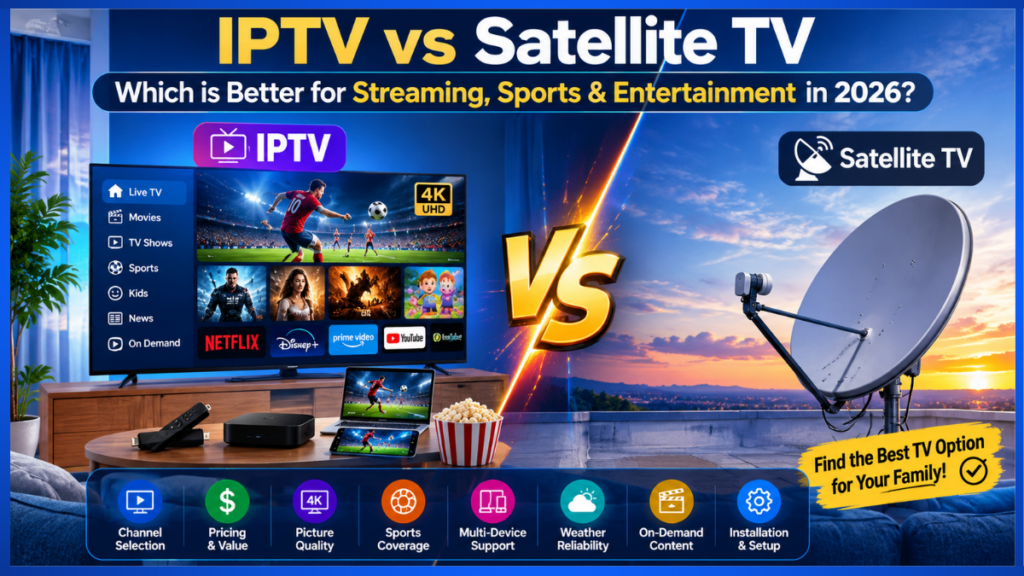
Introduce the fact that many people are confused between IPTV and satellite television. Explain that both deliver TV channels but use completely different technologies.
Mention that this guide compares:
- Technology
- Cost
- Picture quality
- Reliability
- Sports
- Installation
- Internet requirements
- Pros and cons
- Which one is best for different users
What is IPTV?
Explain:
- Internet Protocol Television
- Streams content through internet
- Works on Smart TVs
- Firestick
- Android TV
- Smartphones
- Tablets
- PCs
Include:
- Live TV
- Movies
- TV Shows
- Catch-up
- Video On Demand
What is Satellite TV?
Explain:
- Uses satellites orbiting Earth
Requires:
- Satellite dish
- Receiver
- Cable installation
Popular examples:
- Dish TV
- DirecTV
- Tata Play
- Dish Network
Explain how signals travel from satellite → dish → receiver → TV.
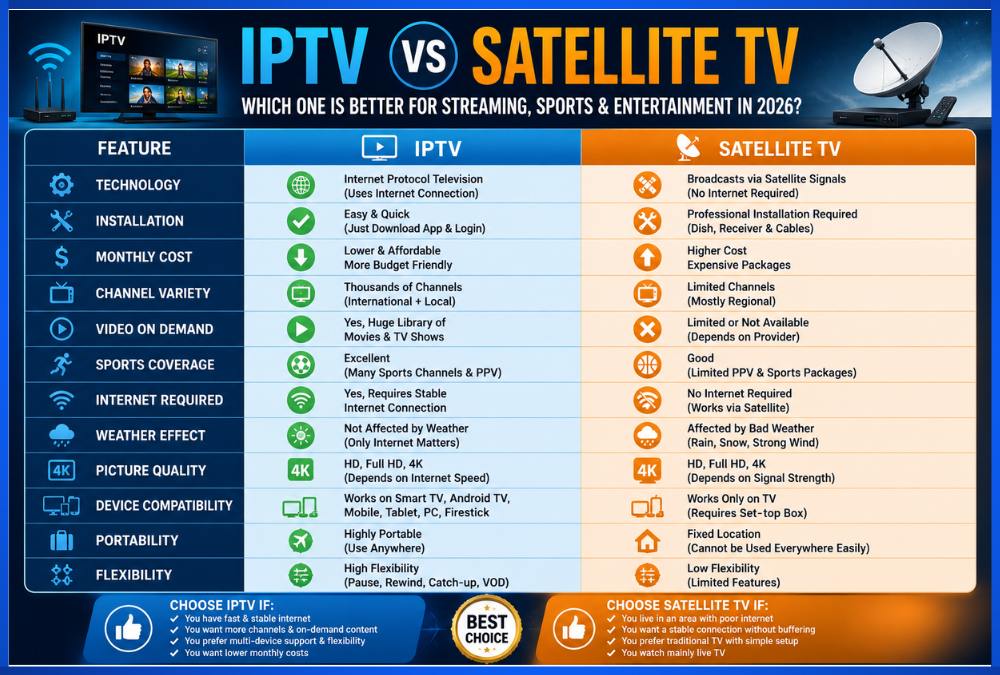
IPTV vs Satellite TV: Quick Comparison Table Create a table like:
Feature- IPTV- Satellite TV
Technology- Internet- Satellite
Installation- Easy- Professional installation
Monthly Cost- Lower- Higher
Channel Variety- Huge- Limited
Video on Demand- Yes- Limited
Sports- Excellent- Good
4K Support- Yes- Yes
International Channels- Excellent- Limited
Internet Needed- Yes- No
Weather Issues- No- Yes
How IPTV Works
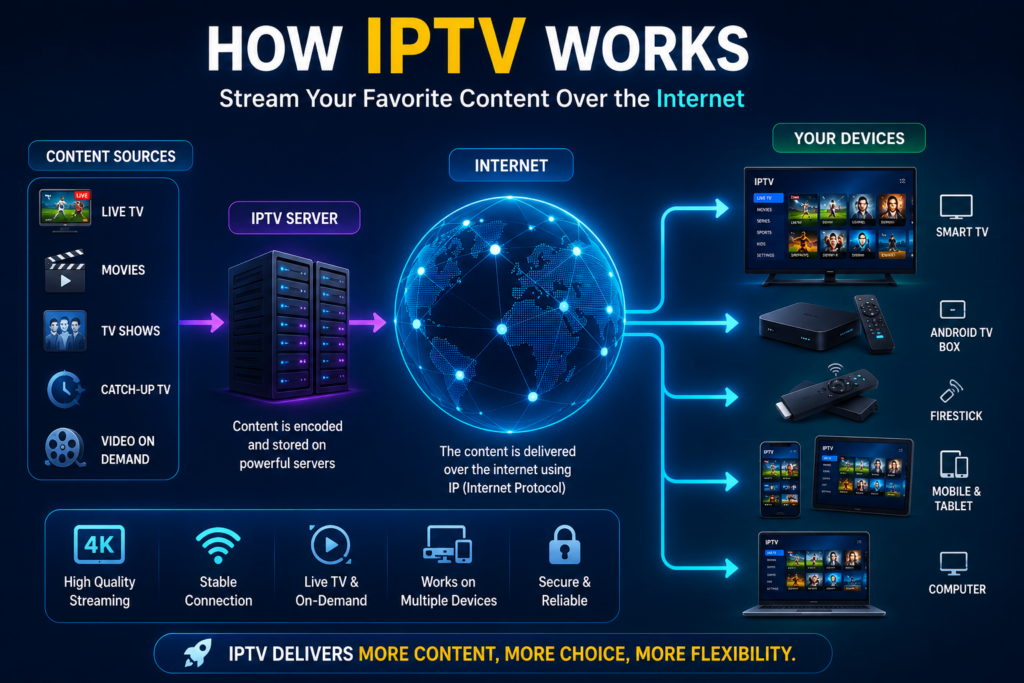
Explain step-by-step:
Internet →
IPTV Server →
App →
TV
How Satellite TV Works
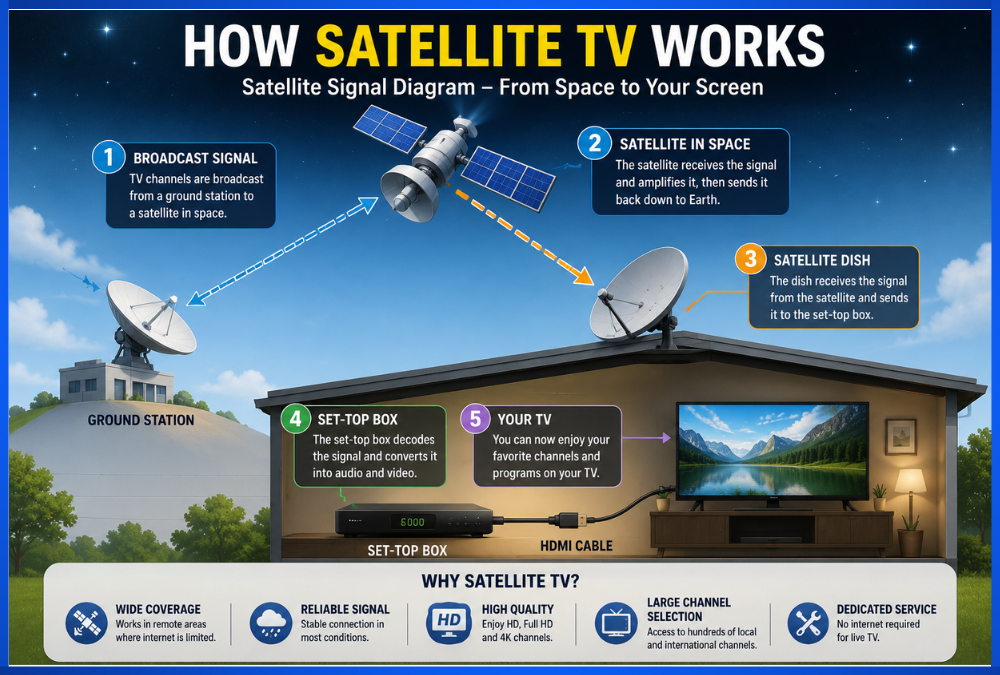
Satellite →
Dish →
Receiver →
Television
Installation Comparison
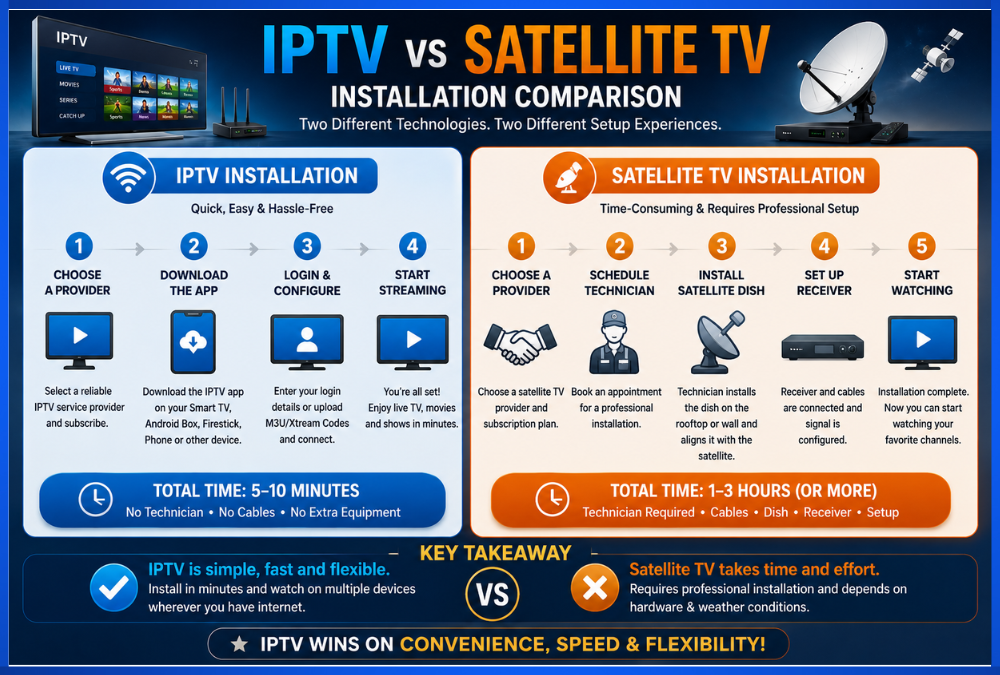
IPTV
- Download app
- Login
- Start watching
Satellite
- Book technician
- Install dish
- Receiver setup
- Wiring
Mention IPTV usually takes only a few minutes to set up.
Picture Quality Comparison
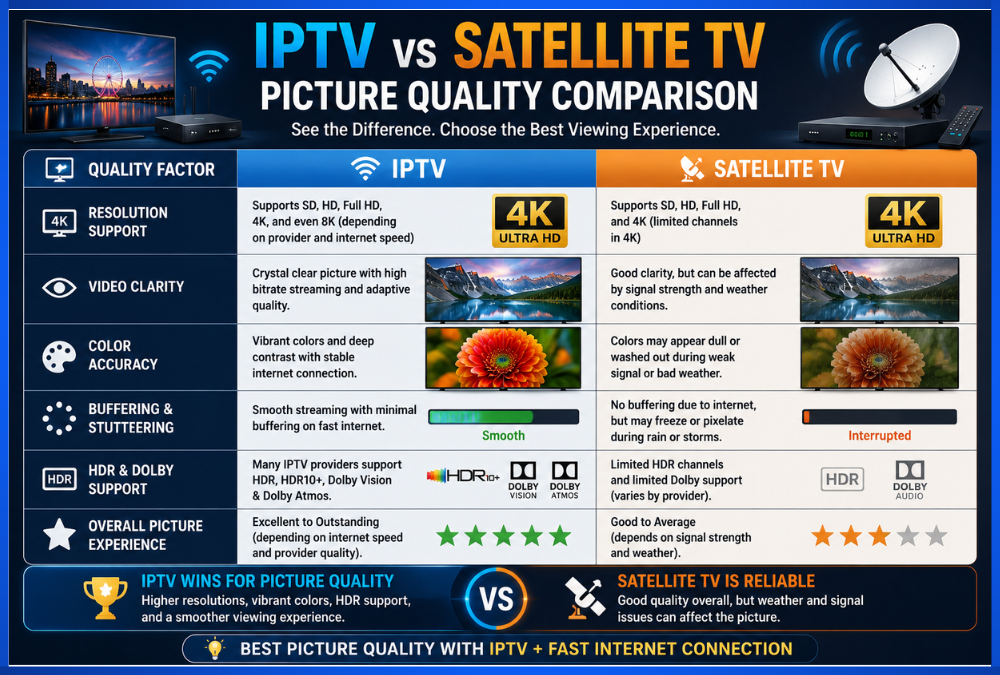
Compare:
- SD
- HD
- Full HD
- 4K
- HDR
Explain IPTV quality depends on internet speed, while satellite quality can be affected by signal strength.
Channel Selection
Discuss:
IPTV
- Thousands of channels
- International channels
- Sports
- Movies
- Kids
- News
Satellite
- Regional packages
- Premium packages
- Fewer international options
Sports Streaming Comparison
Discuss:
Football
NBA
NFL
Cricket
Formula 1
Pay-Per-View
Explain IPTV often offers more flexibility, while official satellite packages may provide licensed broadcasts.
Cost Comparison
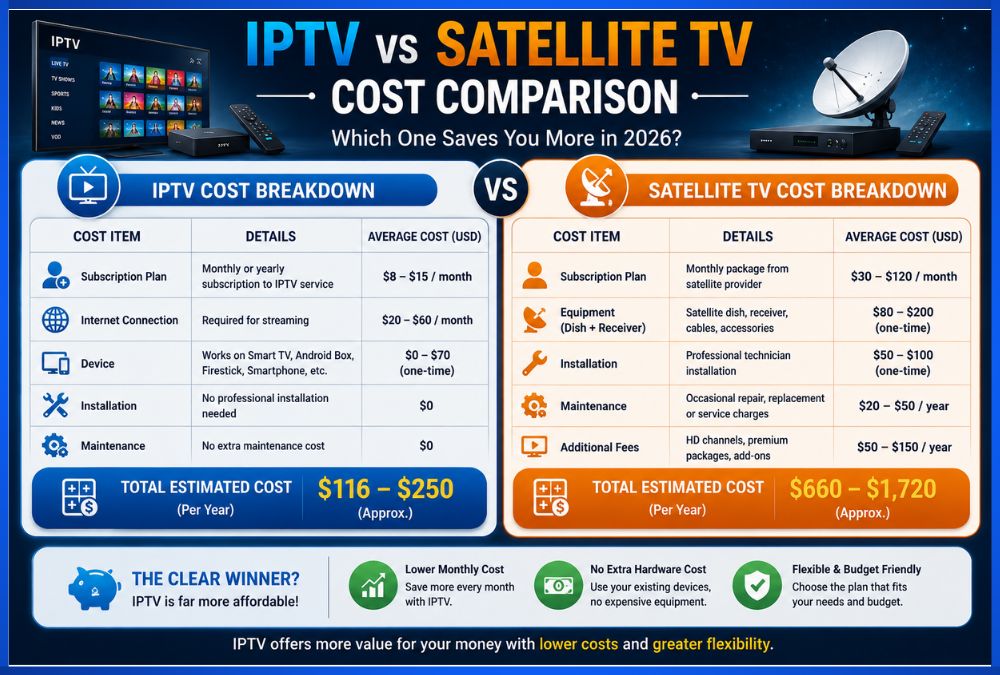
Cover:
Installation cost
Monthly subscription
Equipment
Hidden fees
Long-term savings
Internet Requirement
Explain:
Satellite TV
- Doesn't need the internet for live TV.
IPTV
Recommend internet speeds:
- 15 Mbps (HD)
- 30 Mbps (Full HD)
- 50 Mbps (4K)
Weather Performance
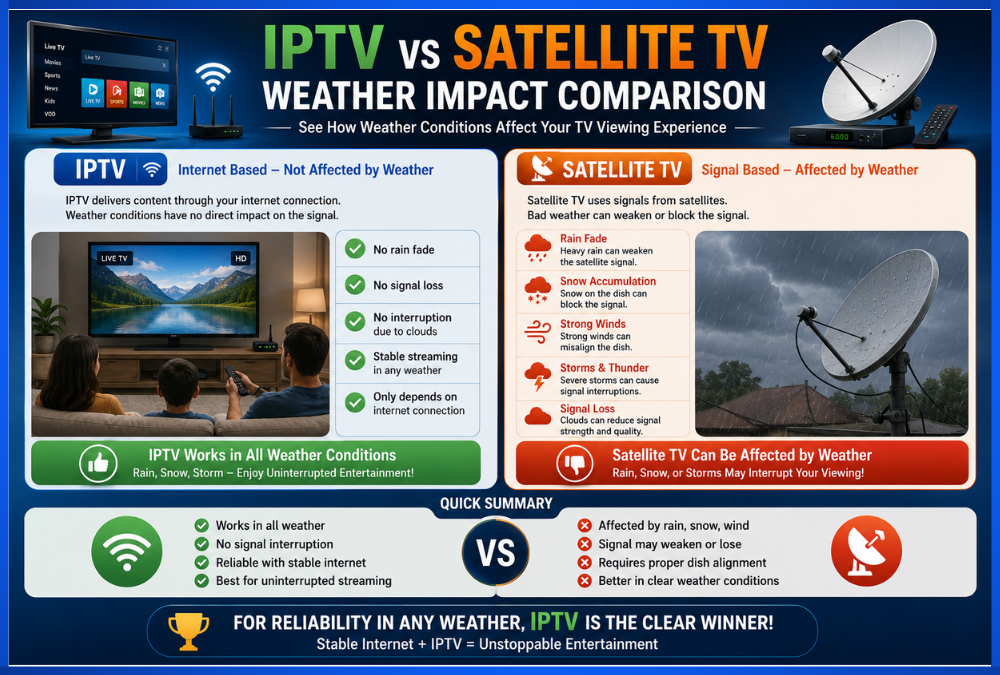
Explain:
Satellite TV:
- Rain fade
- Storm interruptions
- Snow accumulation
- Strong wind
IPTV:
- Unaffected by weather
- Only depends on internet stability
Pros and Cons of IPTV
Pros
- Affordable
- Thousands of channels
- On-demand content
- Multi-device support
- Portable
- Easy installation
Cons
- Needs reliable internet
- Service quality varies by provider
- Some services may operate without proper licensing
Pros and Cons of Satellite TV
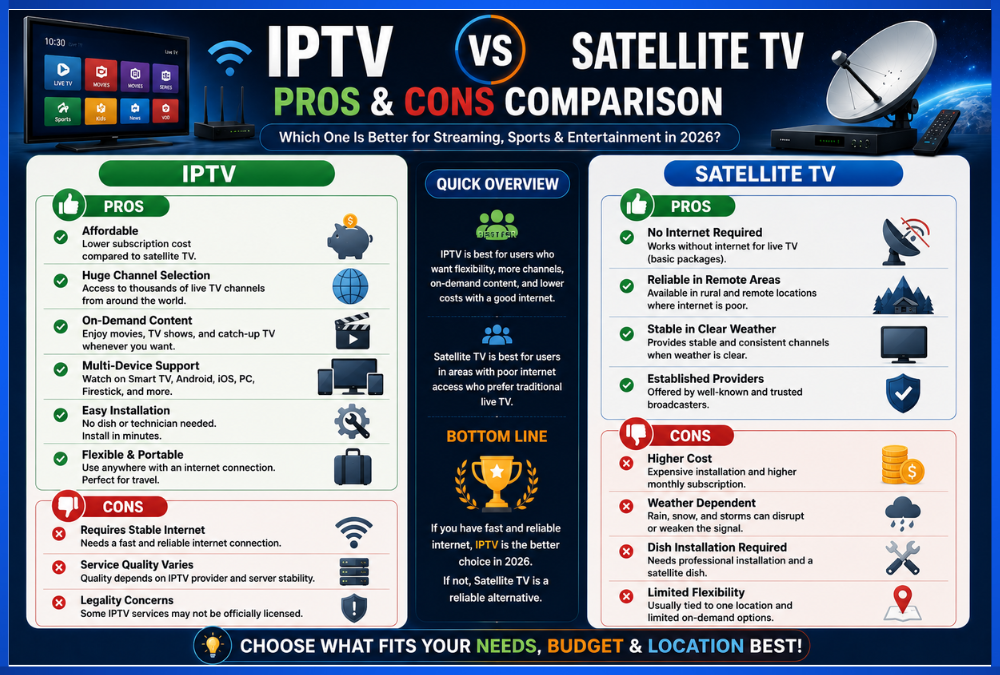
Pros
- Works in remote areas
- No internet required
- Stable in clear weather
- Established providers
Cons
- Dish installation
- Weather interruptions
- Higher monthly cost
- Limited flexibility
- Equipment maintenance
Which One Should You Choose?
Recommend based on different user needs:
Choose IPTV if:
- You have fast internet.
- You want flexibility.
- You enjoy on-demand content.
- You watch on multiple devices.
- You prefer lower monthly costs.
Choose Satellite TV if:
- Internet access is poor or unreliable.
- You live in a remote area.
- You mainly watch traditional live TV.
- You prefer established broadcast services.
Frequently Asked Questions
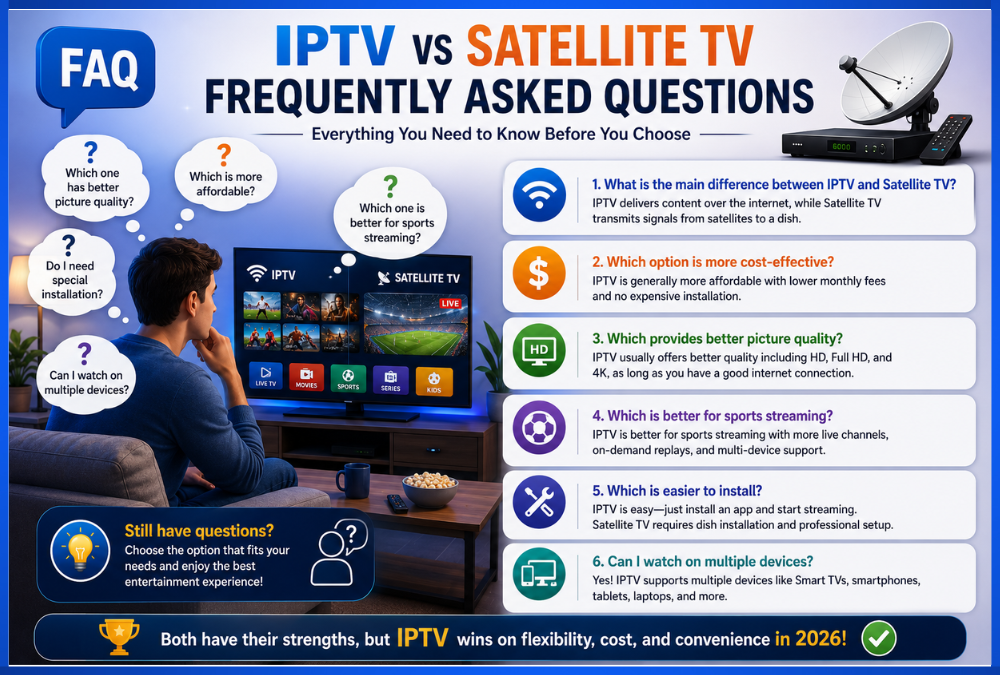
Include 7–10 FAQs such as:
- Is IPTV better than satellite TV?
- Does IPTV require fast internet?
- Can IPTV replace satellite TV?
- Is IPTV cheaper?
- Which is better for sports?
- Can IPTV work without internet?
- Does bad weather affect IPTV?
- Is satellite TV becoming outdated?
Conclusion
Summarize the comparison by noting that IPTV generally offers greater flexibility, wider content selection, and lower ongoing costs for users with reliable internet. Satellite TV remains a strong option in areas with limited broadband availability or for viewers who prefer traditional broadcast services. Encourage readers to choose the option that best fits their viewing habits, budget, and internet access.