Introduction
The way people watch television has changed dramatically over the last two decades. Not long ago, cable and satellite subscriptions were the primary ways to access live TV channels, sports, movies, and news. Today, internet-based streaming has become a popular alternative, giving viewers more flexibility over when, where, and how they enjoy their favorite content.
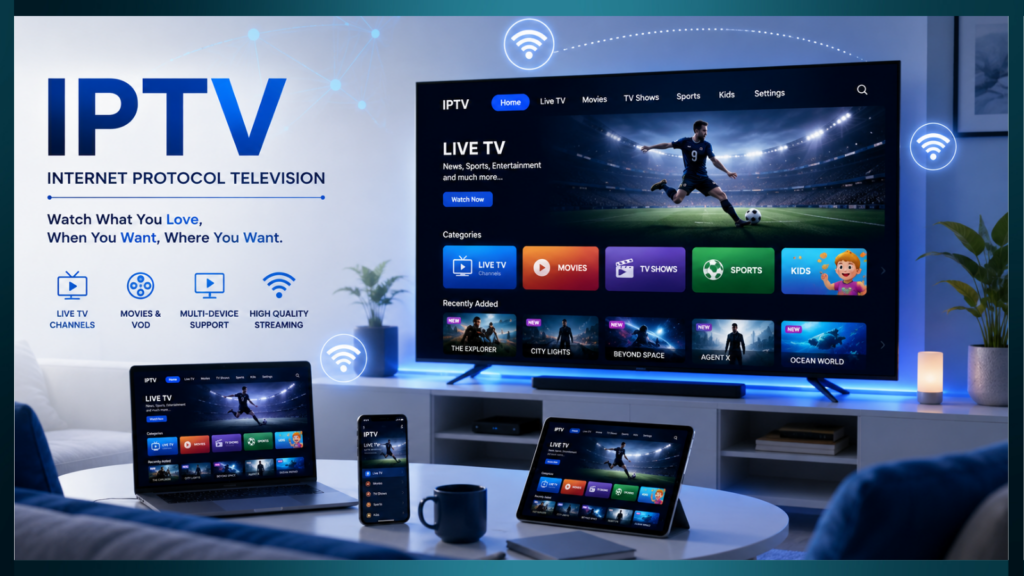
One technology that has played an important role in this shift is Internet Protocol Television, commonly known as IPTV. Instead of delivering television through traditional cable or satellite signals, IPTV uses the internet to stream video content directly to compatible devices.
Whether you're new to the concept or simply curious about how IPTV works, understanding the basics can help you make informed decisions about modern television services.
In this beginner-friendly guide, you'll learn:
- What IPTV is
- How IPTV works
- The main types of IPTV services
- The advantages and limitations of IPTV
- How IPTV compares with traditional television
- Common IPTV terms every beginner should know
By the end of this guide, you'll have a clear understanding of IPTV and why it has become an important part of today's digital entertainment landscape.
What Is IPTV?
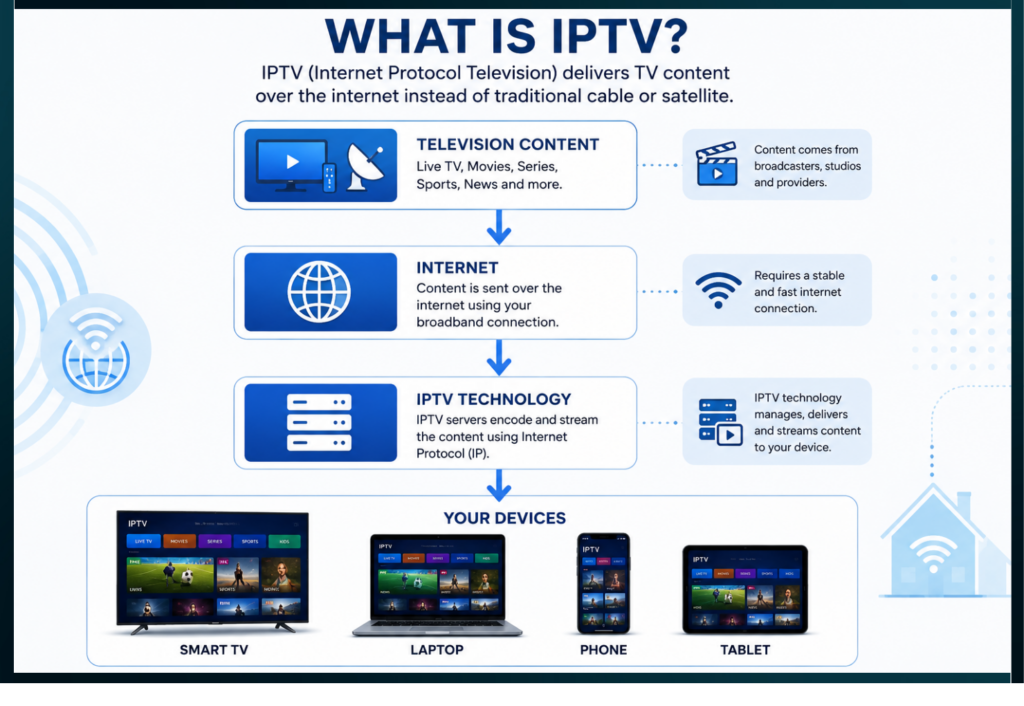
IPTV, or Internet Protocol Television, is a method of delivering television programs and video content through an internet connection instead of traditional cable, satellite, or over-the-air broadcasting.
In simple terms, IPTV allows viewers to access television using internet technology. Rather than receiving signals through a cable line or satellite dish, compatible devices request digital video streams from servers over the internet.
Many IPTV services combine several types of content into one platform, including:
- Live television channels
- Movies
- TV series
- News broadcasts
- Sports programming
- Children's entertainment
- Educational content
- Documentaries
- Music channels
Depending on the service, users may also have access to features such as on-demand viewing, electronic program guides (EPGs), personalized recommendations, and cloud-based recording.
A Simple Example
Imagine you want to watch a television program.
With traditional cable TV, your provider broadcasts channels continuously, and your television tunes in to the selected channel.
With IPTV, your device requests the content over the internet, and the provider's servers deliver the video stream to you in real time.
This internet-based approach offers greater flexibility because viewers can often choose from live channels, catch-up programs, and on-demand libraries within a single platform.
Why Is IPTV Becoming So Popular?
Several factors have contributed to IPTV's increasing popularity around the world.
Greater Flexibility
Many viewers no longer want to be limited by fixed broadcast schedules. IPTV often provides access to both live television and on-demand content, allowing users to watch programs at times that suit them.
Multi-Device Viewing
Unlike traditional television systems that are closely tied to a television set, IPTV can often be accessed on a variety of compatible devices, including:
- Smart TVs
- Android TV devices
- Streaming media players
- Desktop computers
- Laptops
- Smartphones
- Tablets
This flexibility makes it possible to enjoy entertainment at home or while traveling.
Diverse Entertainment Options
Many IPTV platforms offer a combination of:
- News
- Sports
- Movies
- TV series
- Documentaries
- Children's programming
- Lifestyle channels
- Educational content
Having different categories in one place can simplify the viewing experience.
Internet-Based Technology
Because IPTV uses internet protocols, providers can update content libraries, improve applications, and introduce new features without changing physical infrastructure.
How IPTV Works
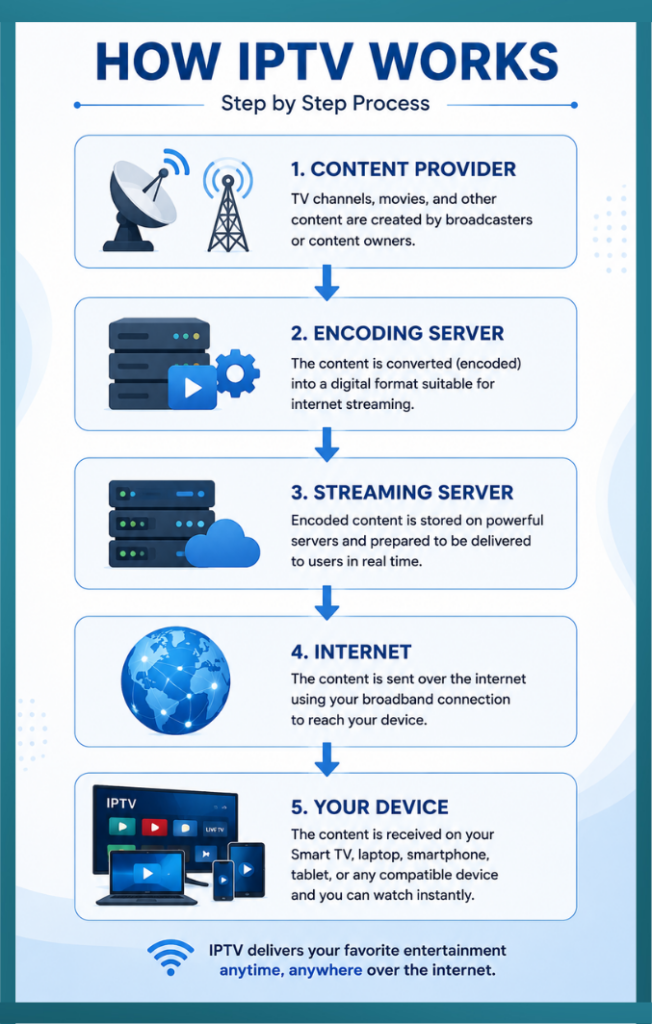
Although IPTV may sound technical, the basic process is relatively straightforward.
Let's break it down into simple steps.
Step 1: Content Is Collected
Television programs, movies, and other media originate from broadcasters, studios, or content owners. These programs are prepared for digital distribution.
Step 2: Digital Encoding
The original video is converted into digital formats suitable for internet streaming.
Modern compression technologies help maintain picture quality while reducing the amount of data required for transmission.
Step 3: Content Is Stored or Distributed
Depending on the type of programming:
- Live television is transmitted continuously.
- On-demand videos are stored on servers until requested by viewers.
Reliable server infrastructure plays an important role in delivering a smooth streaming experience.
Step 4: User Requests Content
When a viewer selects a channel or a video, the IPTV application sends a request to the provider's servers.
Unlike traditional broadcasting, where all channels are transmitted simultaneously, IPTV typically delivers only the content that the user requests.
Step 5: Streaming Begins
The requested content is delivered over the internet to the user's compatible device.
With a stable internet connection, playback can begin within seconds.
A Simple IPTV Workflow
You can think of the process like this:
Content Provider
↓
Digital Encoding
↓
Streaming Servers
↓
Internet Connection
↓
Your Device
↓
Watch TV
Each step works together to provide an uninterrupted viewing experience.
Live IPTV vs On-Demand Streaming
IPTV generally supports two primary viewing experiences.
Live Television
Live IPTV streams television channels in real time, much like traditional broadcast television.
Examples include:
- News programs
- Sports events
- Entertainment channels
- Educational broadcasts
- Lifestyle programming
Viewers watch content as it is being broadcast.
Video on Demand (VOD)
Video on Demand allows viewers to choose content whenever they want rather than following a broadcast schedule.
Examples include:
- Movies
- TV series
- Documentaries
- Children's programs
- Educational videos
Instead of waiting for a scheduled broadcast, users can select content from a library and start watching immediately.
What Do You Need to Use IPTV?
Although requirements vary by provider, most IPTV services generally require:
A Reliable Internet Connection
Streaming quality depends heavily on internet speed and stability.
General recommendations include:
Video Quality Recommended Speed
Standard Definition (SD) 5 Mbps
High Definition (HD) 10 Mbps
Full HD (1080p) 20 Mbps
4K Ultra HD 35 Mbps or higher
These are general guidelines. Actual performance depends on factors such as network congestion, Wi-Fi quality, and the number of devices using the connection.
A Compatible Device
Many IPTV services support a range of internet-connected devices, including:
- Smart TVs
- Android TV devices
- Google TV
- Streaming media players
- Windows PCs
- macOS computers
- Android smartphones
- iPhones
- Tablets
Always check a provider's compatibility information before subscribing.
An IPTV Application
Many providers recommend using compatible IPTV applications to access their services. These apps help users organize channels, browse content, and manage playback.
Some providers also offer their own dedicated applications.
User Credentials
After subscribing to a service (where applicable), users typically receive account credentials or setup information that allows them to access the platform.
Follow the provider's instructions carefully during installation.
Why Understanding IPTV Matters
As internet-based entertainment continues to evolve, understanding IPTV can help consumers make informed decisions when comparing television options.
Rather than focusing only on channel numbers or subscription prices, it's important to understand how the technology works, what devices are supported, and what features are available.
A basic knowledge of IPTV also makes it easier to troubleshoot common issues, evaluate providers, and choose a service that matches your viewing preferences.
Types of IPTV Services
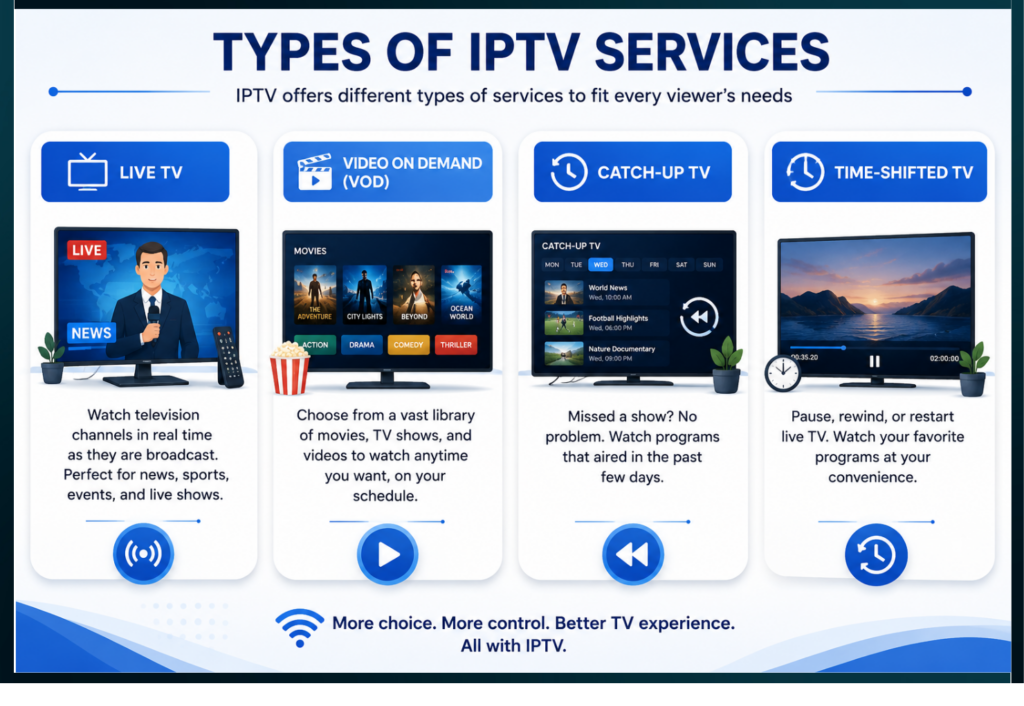
One of the reasons IPTV has become so popular is its versatility. Instead of offering only one way to watch television, IPTV technology can deliver different types of content to suit various viewing preferences.
Understanding these categories will help you better evaluate IPTV services and choose one that aligns with your needs.
- Live IPTV
Live IPTV streams television channels in real time over the internet, much like traditional cable or satellite television.
This option is ideal for viewers who enjoy watching programs as they are broadcast.
Common examples include:
- News channels
- Sports events
- Entertainment programs
- Lifestyle channels
- Educational broadcasts
- Music channels
Best For
- Live sports enthusiasts
- Breaking news viewers
- Viewers who enjoy scheduled television programming
2.Video on Demand (VOD)
Video on Demand, often shortened to VOD, allows users to watch content whenever they choose rather than following a broadcast schedule.
Instead of waiting for a movie or television episode to air, viewers simply browse a library and start watching instantly.
VOD libraries may include:
- Movies
- TV series
- Documentaries
- Children's programs
- Educational videos
Benefits
- Watch anytime
- Pause and resume
- Search by category
- Greater viewing flexibility
3.Time-Shifted Television
Time-shifted TV allows viewers to watch programs after they have already aired.
Unlike a permanent on-demand library, this feature usually makes content available for a limited period after broadcast.
Examples include:
- Watching yesterday's news
- Catching a missed sports program
- Replaying a recently aired documentary
This feature is especially useful for people with busy schedules.
4.Catch-Up TV
Catch-Up TV is similar to time-shifted television but focuses on recently broadcast programs.
Instead of recording shows yourself, some providers make recent broadcasts available for a short time.
This allows users to watch selected programs even if they missed the original broadcast.
Availability varies depending on the provider and content rights.
5.Interactive IPTV Features
Some IPTV platforms also include interactive features that improve the viewing experience.
Examples may include:
- Electronic Program Guides (EPGs)
- Favorite channel lists
- Personalized recommendations
- Search functionality
- Multi-language support
- Subtitle options
- Parental controls
These features can make navigating large content libraries much easier.
Benefits of IPTV
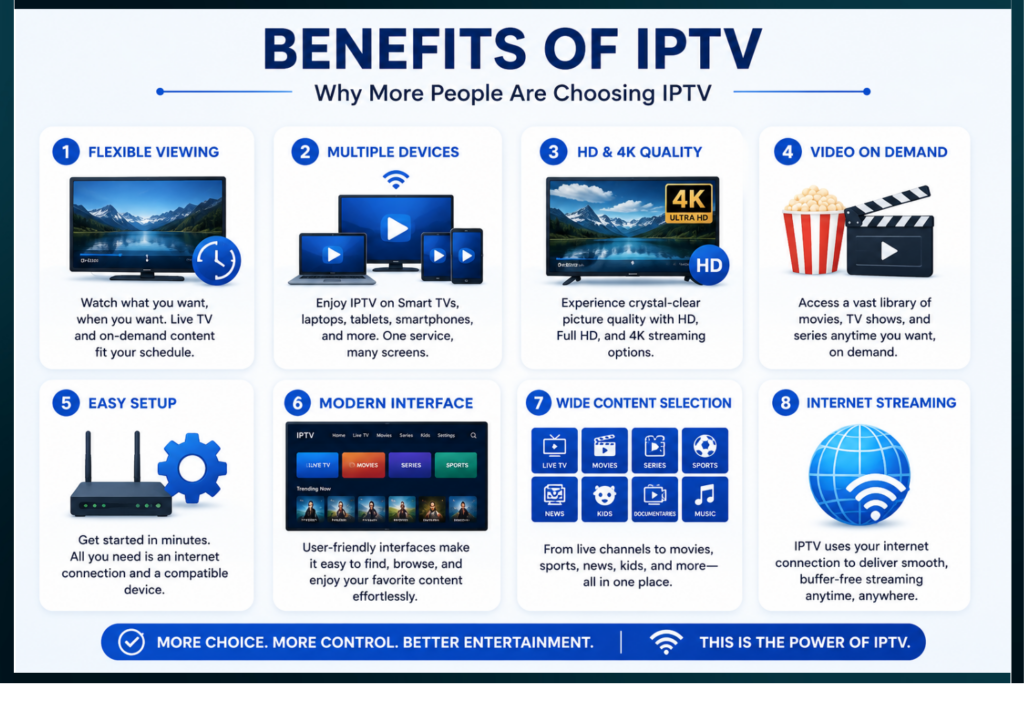
IPTV has become increasingly popular because it offers several advantages over traditional television delivery methods.
Here are some of the key benefits.
Flexible Viewing
One of IPTV's biggest strengths is flexibility.
Instead of being tied to a fixed television schedule, users can often enjoy both live broadcasts and on-demand content.
This flexibility allows viewers to choose entertainment that fits their lifestyle.
Wide Device Compatibility
Modern IPTV services frequently support a variety of internet-connected devices, including:
- Smart TVs
- Android TV
- Google TV
- Streaming devices
- Windows computers
- macOS computers
- Smartphones
- Tablets
This means viewers can switch between devices without changing how they access their content.
Broad Content Selection
Many IPTV services combine different types of entertainment into one platform.
Content categories may include:
- Movies
- Television series
- News
- Sports
- Children's entertainment
- Lifestyle programming
- Educational content
- Documentaries
Having multiple categories available in one place can simplify content discovery.
Improved User Experience
Many IPTV platforms include features that make navigation more convenient, such as:
- Search tools
- Favorites lists
- Electronic Program Guides
- Content categories
- Personalized recommendations
These features help viewers find programs more quickly.
Easy Setup
Compared with traditional television installations that may require cables, satellite dishes, or technician visits, IPTV often requires:
- A compatible device
- A stable internet connection
- An approved application
- Account credentials (where applicable)
For many users, setup is straightforward.
High-Quality Streaming
Depending on the provider, device, and internet connection, IPTV may support:
- HD
- Full HD
- 4K Ultra HD
Higher-quality streaming can provide a more immersive viewing experience.
Regular Updates
Because IPTV operates over the internet, providers can update applications, improve interfaces, and expand content libraries more easily than traditional broadcast systems.
Limitations of IPTV
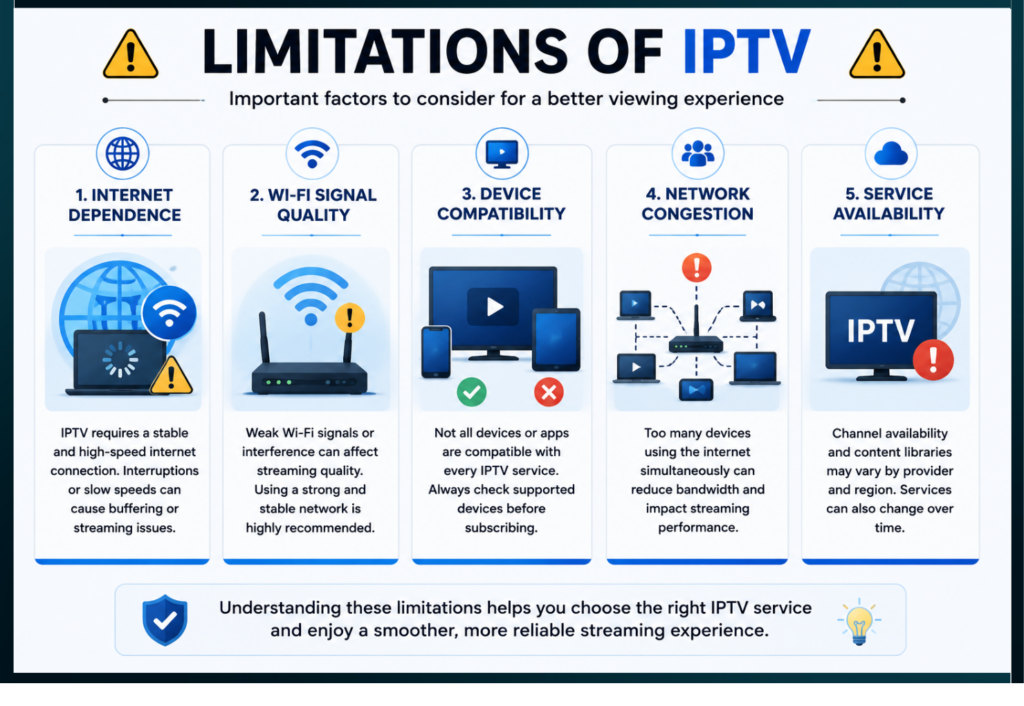
Although IPTV offers many advantages, it also has some limitations that users should understand before choosing a service.
Internet Dependence
Unlike traditional broadcast television, IPTV relies on an internet connection.
If your internet is slow, unstable, or interrupted, streaming quality may decrease or playback may stop until the connection is restored.
Variable Performance
Streaming quality can be influenced by factors such as:
- Internet speed
- Home Wi-Fi coverage
- Network congestion
- Device performance
- Server reliability
A strong internet connection generally provides a better experience.
Device Compatibility
Not every IPTV application works equally well on every device.
Before subscribing, verify that your preferred devices are supported and meet any system requirements.
Feature Differences
Not all providers offer the same features.
For example, availability of:
- Catch-Up TV
- Cloud recording
- Multiple simultaneous streams
- Subtitle options
- Electronic Program Guides
may vary depending on the service.
Content Availability
The channels and on-demand content available through an IPTV service depend on the provider's licensing agreements and regional availability. Content libraries may also change over time.
Learning Curve
For users who are unfamiliar with streaming technology, the initial setup process and terminology may take a little time to understand.
Fortunately, most providers offer setup guides or customer support to assist new users.
IPTV vs Traditional Television
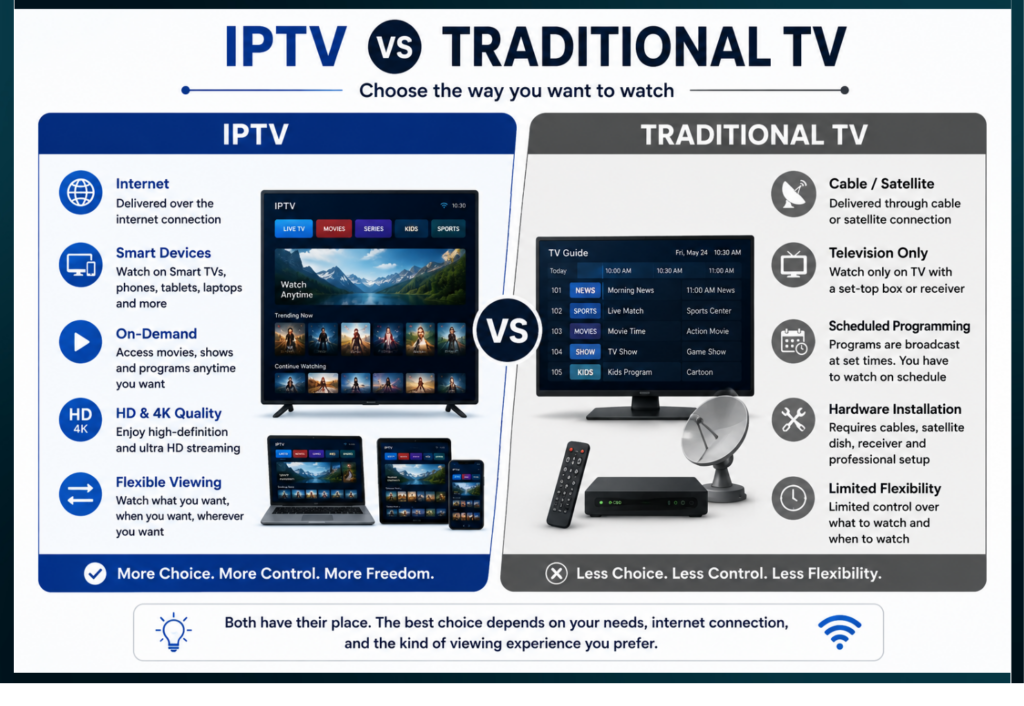
Many people considering IPTV wonder how it compares with traditional television services.
The following comparison highlights some key differences.
Feature IPTV Traditional TV
Delivery Method- Internet connection- Cable, satellite, or broadcast signal
Viewing Flexibility- Live and often on-demand- Primarily scheduled broadcasts
Device Options- Multiple connected devices- satellite receiver
Software Updates- Frequently updated- Less frequent updates
Installation- App-based on compatible devices- Often involves hardware installation
Content Navigation- Search, categories, favorites, EPG- Channel-by-channel navigation
Both approaches have advantages. The best choice depends on factors such as your internet connection, viewing habits, preferred devices, and the services available in your area.
Which Option Is Right for You?
Choosing between IPTV and traditional television depends on your personal preferences.
IPTV may be a good fit if you:
- Prefer watching content on multiple devices.
- Enjoy both live TV and on-demand entertainment.
- Want a flexible viewing experience.
- Have a stable, high-speed internet connection.
Traditional television may still suit viewers who:
- Live in areas with limited internet access.
- Prefer a conventional TV setup.
- Watch mostly live scheduled programming.
There is no universal “best” option. The right choice depends on your individual needs and circumstances.
Tips for Choosing an IPTV Service
Before selecting an IPTV provider, consider the following:
- Confirm that the service supports your devices.
- Review the available content categories.
- Check internet speed recommendations.
- Understand the subscription options.
- Read the provider's policies.
- Look for clear customer support resources.
- If available, use a trial period to evaluate the service.
Making an informed decision can help you find a service that offers a better long-term viewing experience.
Common IPTV Terms Every Beginner Should Know
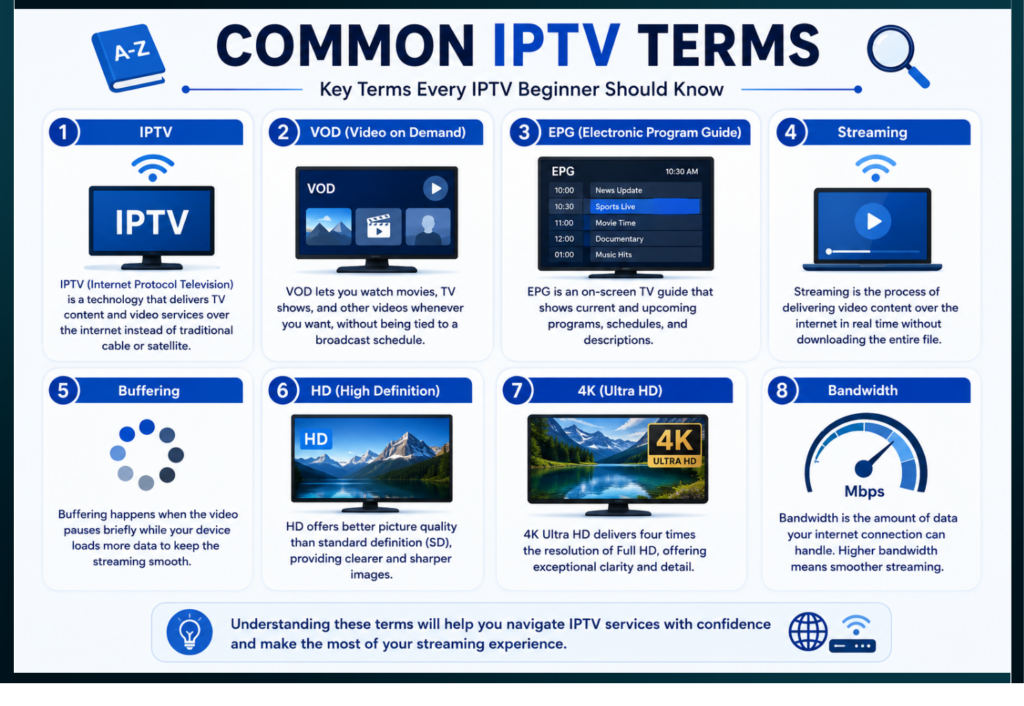
If you're new to IPTV, you'll likely encounter technical terms that may seem confusing at first. Understanding these common terms will help you navigate IPTV services more confidently.
IPTV (Internet Protocol Television)
IPTV stands for Internet Protocol Television, a method of delivering television content through an internet connection instead of traditional cable, satellite, or terrestrial broadcasting.
Live TV Live
TV refers to television channels that are streamed in real time, allowing viewers to watch programs as they are being broadcast.
Examples include:
- News channels
- Sports events
- Live entertainment
- Educational programs
Video on Demand (VOD)
VOD allows viewers to watch movies, TV shows, documentaries, and other content whenever they choose, rather than waiting for a scheduled broadcast.
EPG (Electronic Program Guide)
An Electronic Program Guide is a digital TV schedule that displays:
- Current programs
- Upcoming shows
- Broadcast times
- Program descriptions
An EPG makes it easier to browse channels and plan what to watch.
Streaming
Streaming is the process of watching video over the internet without downloading the entire file before playback begins.
Buffering
Buffering occurs when the video pauses temporarily because the device is waiting for additional data.
Common causes include:
- Slow internet speed
- Weak Wi-Fi signal
- Network congestion
- High internet usage in the home
Resolution
Resolution refers to the clarity of a video.
Common resolutions include:
- SD (Standard Definition)
- HD (High Definition)
- Full HD (1080p)
- 4K Ultra HD
Higher resolutions provide sharper images but generally require faster internet connections.
Bandwidth
Bandwidth is the amount of internet data that can be transmitted over your connection in a given time. Higher bandwidth allows smoother streaming, especially when multiple devices are online.
Frequently Asked Questions (FAQ)
1. What exactly is IPTV?
IPTV is a technology that delivers television programs and video content over the internet rather than through cable or satellite systems.
2. How is IPTV different from cable TV?
Traditional cable TV uses dedicated cable infrastructure, while IPTV uses an internet connection to deliver television content.
3. Do I need a Smart TV to use IPTV?
No. Many IPTV services are compatible with a variety of devices, including streaming devices, computers, smartphones, and tablets.
4. What internet speed is recommended?
General recommendations are:
Video Quality Suggested Speed
SD 5 Mbps
HD 10 Mbps
Full HD 20 Mbps
4K 35 Mbps or higher
Actual performance may vary depending on network conditions and the number of connected devices.
5. Can I use IPTV on multiple devices?
Many services support multiple compatible devices, though the number of simultaneous streams depends on the provider's subscription terms.
6. Is IPTV suitable for live sports?
Many IPTV services include live television channels that may feature sports programming. The availability of specific events depends on the provider and its content rights.
7. Is IPTV legal?
IPTV technology itself is legal. However, whether a particular service is lawful depends on its licensing agreements and compliance with applicable laws. Always choose providers that operate legally in your region.
8. Can I travel and still use IPTV?
Some providers allow access from different locations, while others may have geographic restrictions. Check the provider's terms before traveling.
9. Why does buffering happen?
Buffering may occur because of slow internet speeds, Wi-Fi interference, network congestion, or temporary server issues. Improving your network setup can often reduce interruptions.
10. What should I consider before choosing an IPTV service?
Evaluate:
- Device compatibility
- Streaming quality
- Content categories
- Customer support
- Subscription options
- Privacy and refund policies
- Trial availability (if offered)
Best Practices for New IPTV Users
If you're just getting started, these tips can help you enjoy a better experience.
Use a Stable Internet Connection
A reliable broadband connection is one of the most important factors for smooth streaming.
Keep Your Devices Updated
Regular software updates improve performance, compatibility, and security.
Choose Compatible Devices
Before subscribing, verify that your preferred TV, streaming device, computer, or mobile device is supported.
Review Provider Policies
Take time to read the provider's:
- Terms of Service
- Privacy Policy
- Refund Policy
- Supported devices
- Customer support information
Stay Informed About Licensing
Content availability varies depending on licensing agreements and local regulations. Choosing providers that respect copyright and licensing requirements helps ensure a more reliable viewing experience.
Final Thoughts
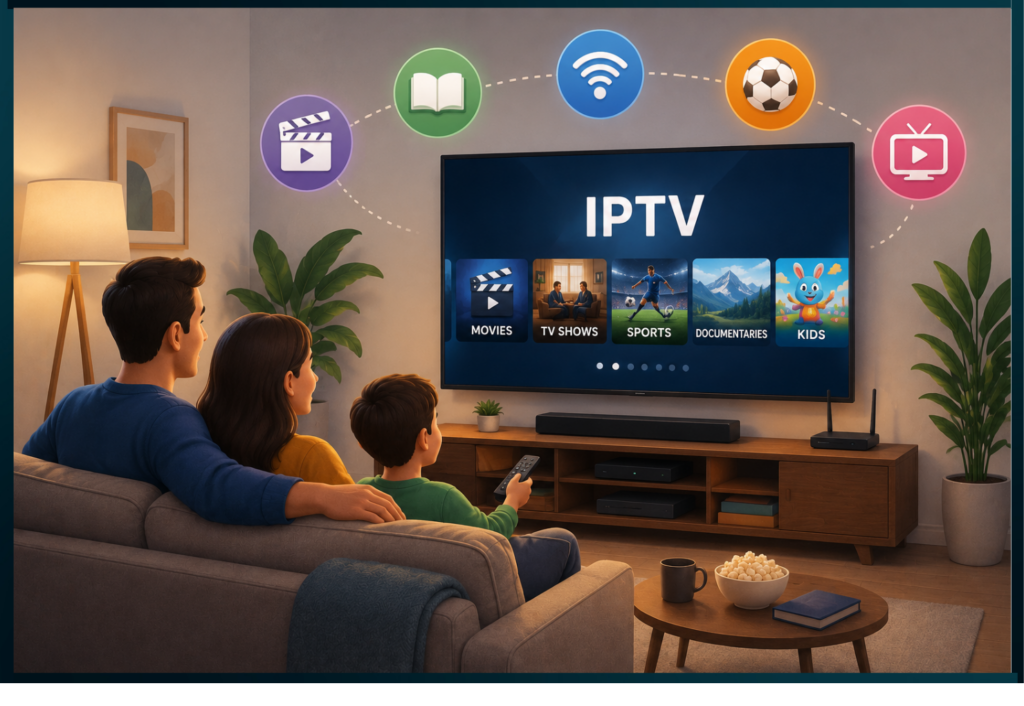
IPTV represents an important evolution in how television content is delivered and enjoyed. By using internet technology, it offers viewers greater flexibility, wider device compatibility, and access to a variety of live and on-demand programming.
However, selecting an IPTV service involves more than comparing prices or channel counts. It's important to evaluate streaming quality, device support, user experience, customer service, and provider transparency.
As streaming technology continues to develop, IPTV is likely to remain an important part of the digital entertainment landscape.
Conclusion
Understanding IPTV is the first step toward making informed decisions about internet-based television services.
In this guide, we've explored:
- What IPTV is
- How IPTV works
- The different types of IPTV services
- The advantages and limitations of IPTV
- How IPTV compares with traditional television
- Common IPTV terminology
- Frequently asked questions
Whether you're simply learning about IPTV or considering an internet-based TV solution, having a clear understanding of the technology will help you evaluate services more confidently.
As always, choose providers that operate responsibly and comply with the laws and licensing requirements in your region.