
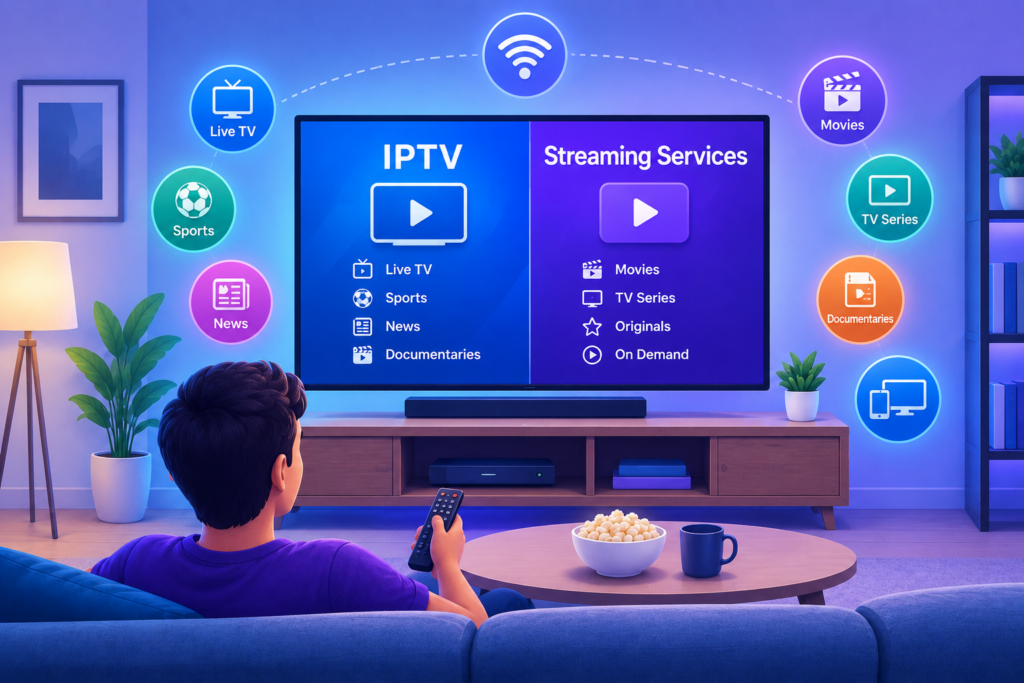
With so many ways to watch television and online content today, it's easy to confuse IPTV and streaming services. Both use the internet to deliver videos, movies, TV shows, and live content, but they work differently and are designed for different viewing experiences.
If you're wondering whether IPTV or streaming services are the better choice, this guide explains how each works, their key differences, and the advantages of both.
What Is IPTV?
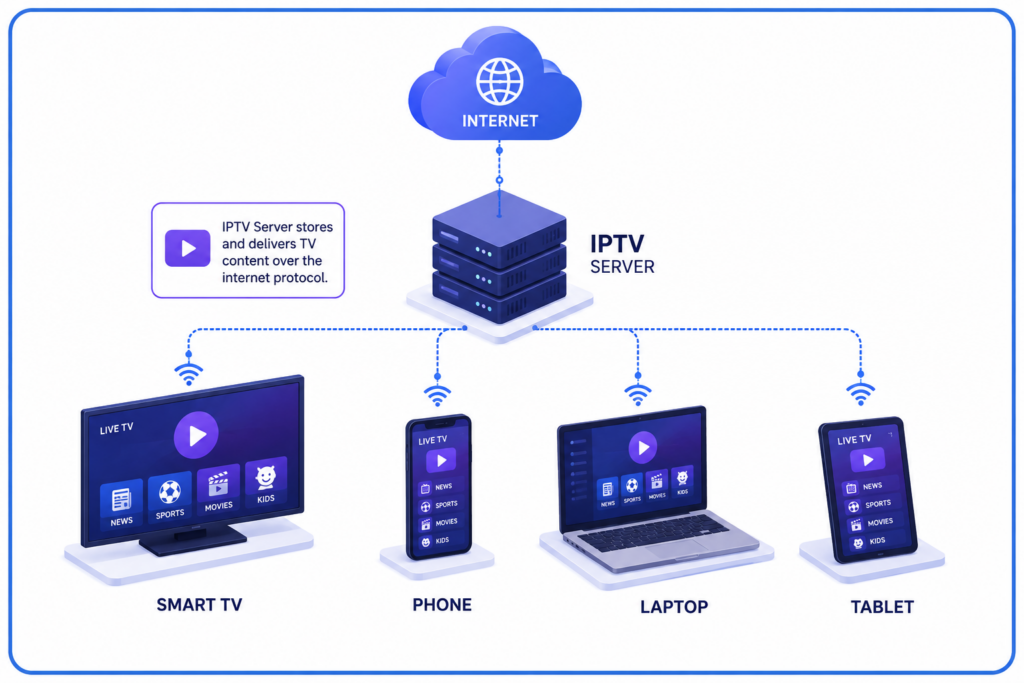
IPTV (Internet Protocol Television) is a technology that delivers television programming through an internet connection instead of traditional cable or satellite networks.
Rather than broadcasting channels through radio waves or cables, IPTV sends TV content using Internet Protocol (IP). Users can access live television, video on demand (VOD), and time-shifted programming through compatible apps or devices.
Common IPTV features include:
- Live TV channels
- Video on Demand (VOD)
- Catch-up TV
- Electronic Program Guide (EPG)
- Multi-device compatibility
IPTV is commonly viewed on:
- Smart TVs
- Android TV boxes
- Amazon Fire TV Stick
- Smartphones
- Tablets
- Computers
What Are Streaming Services?
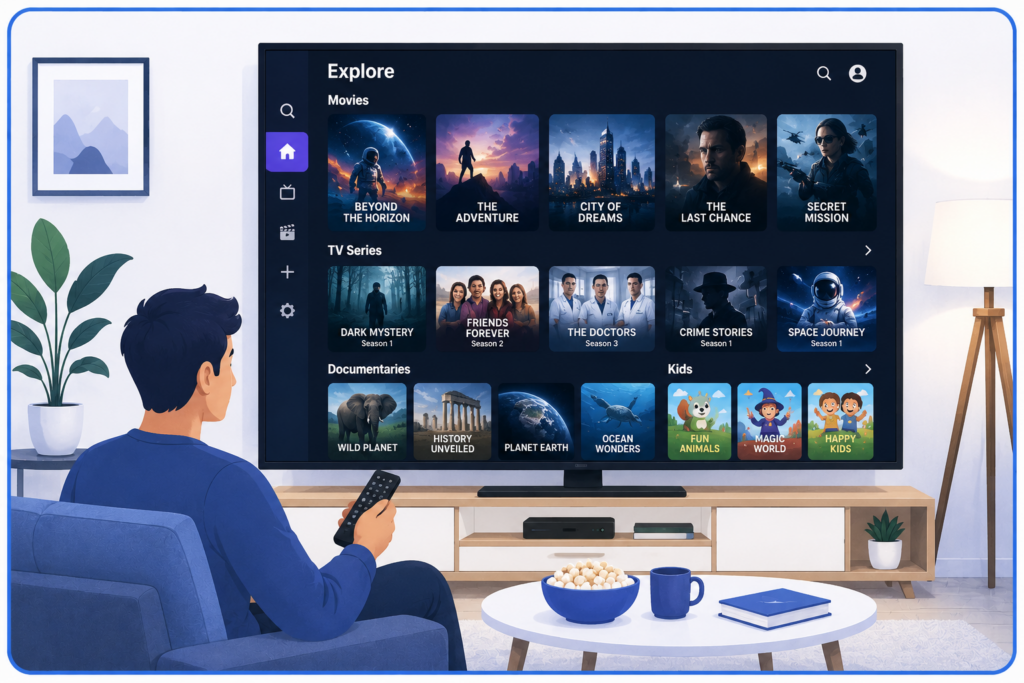
Streaming services are online platforms that let users watch movies, TV series, documentaries, and other digital content over the internet.
Unlike IPTV, most streaming platforms focus primarily on on-demand entertainment, allowing viewers to choose what they want to watch whenever they want.
Popular examples include movie and TV subscription platforms, sports streaming services, music streaming apps, and educational video platforms.
Streaming services usually offer:
- On-demand content
- Original productions
- Personalized recommendations
- Offline downloads (on supported devices)
- Multiple user profiles
IPTV vs Streaming Services: Key Differences
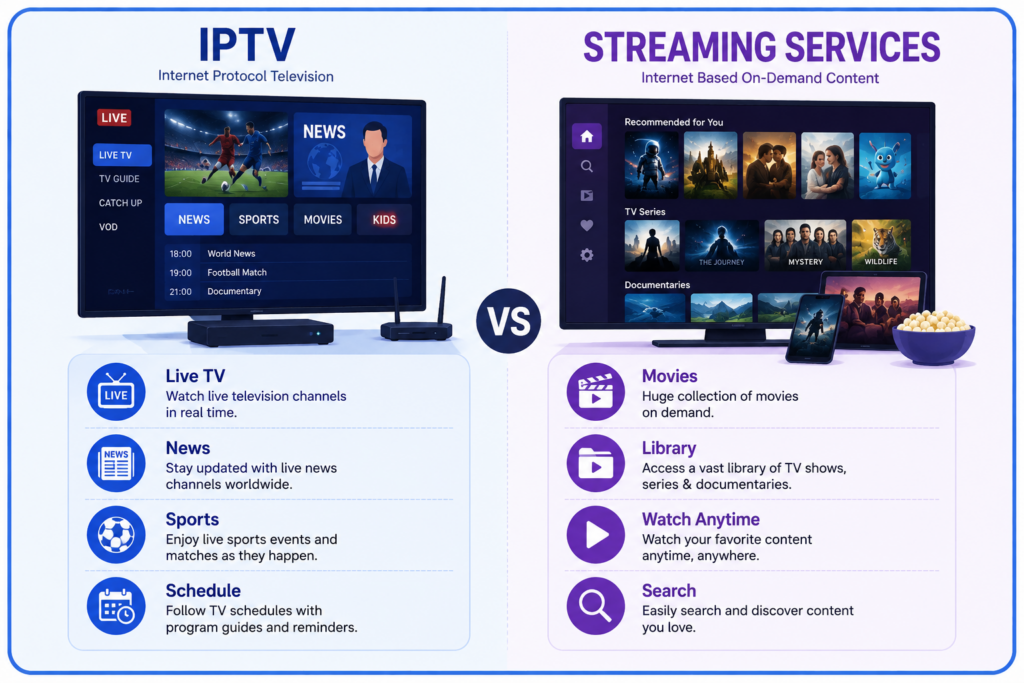
Although both rely on internet connections, there are several important differences.
| Feature | IPTV | Streaming Services |
| Content Type | Live TV, VOD, Catch-up TV | Mostly on-demand content |
| Live Television | Yes | Some platforms offer limited live content |
| Channel Experience | Traditional TV channel lineup | Content library organized by titles |
| Viewing Style | Similar to cable television | Watch any title whenever you want |
| Program Schedule | Live broadcasts follow schedules | No schedule for most content |
| Internet Required | Yes | Yes |
| Device Support | Wide range of compatible devices | Wide range of compatible devices |
Content Availability
One of the biggest differences is how content is organized.
IPTV
IPTV is designed to recreate the experience of traditional television. Users browse channels, watch live broadcasts, and follow scheduled programming much like cable TV.
Many IPTV platforms also include:
- Sports channels
- News channels
- Entertainment
- Kids' programming
- International channels
Streaming Services
Streaming platforms organize content into libraries instead of TV channels.
You simply search for:
- Movies
- TV series
- Documentaries
- Children's content
- Original productions
Then watch them whenever you choose.
Live TV Experience
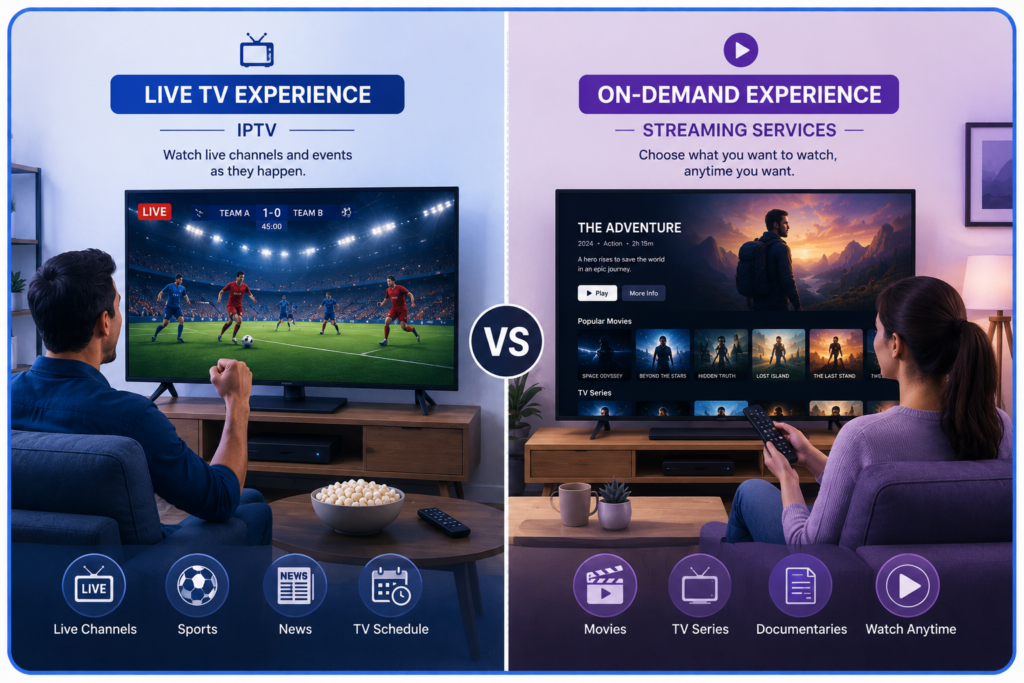
If watching live television is your priority, IPTV generally focuses more heavily on live broadcasts.
Streaming services often specialize in on-demand entertainment, although some also provide selected live events or live TV plans depending on the platform.
User Experience
IPTV
Users typically:
- Browse channel lists
- Use electronic program guides (EPG)
- Watch live television
- Switch channels instantly
- Schedule viewing around live broadcasts
Streaming Services
Users usually:
- Search by title
- Browse categories
- Receive personalized recommendations
- Continue watching where they left off
- Create watchlists
Internet Speed Requirements
Both IPTV and streaming services require a reliable internet connection.
For smoother viewing, many households aim for approximately:
- HD Streaming: 10–15 Mbps
- Full HD Streaming: 15–25 Mbps
- 4K Streaming: 25 Mbps or higher
A stable connection is often more important than simply having very high download speeds.
Supported Devices
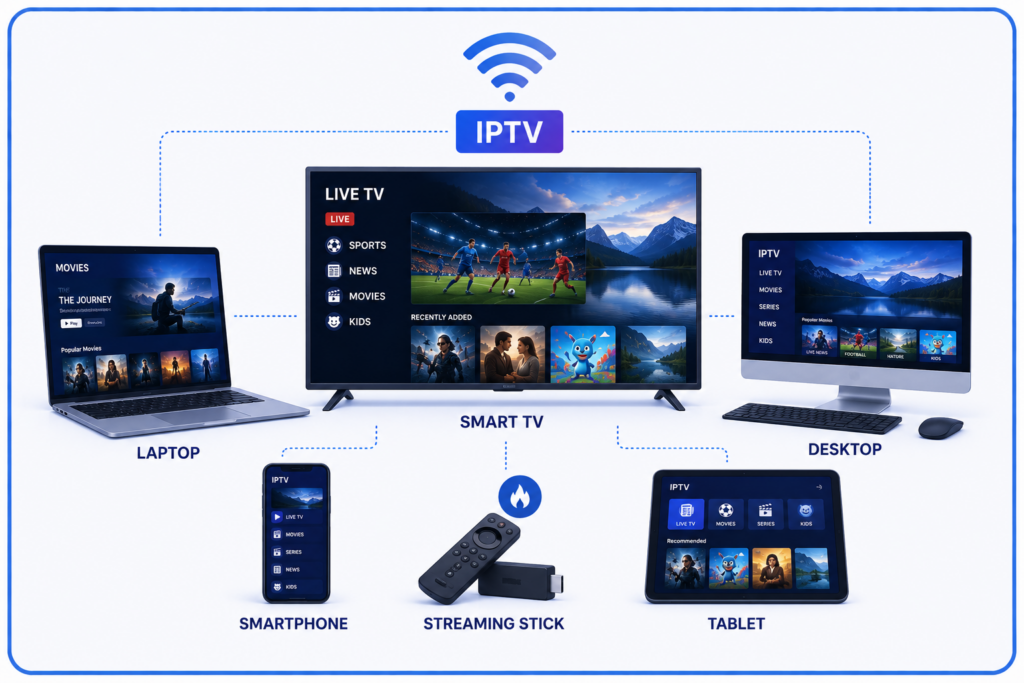
Both technologies support a wide range of devices, including:
- Smart TVs
- Android devices
- iPhones and iPads
- Windows PCs
- Mac computers
- Streaming boxes
- Tablets
Compatibility may vary depending on the application or service being used.
Advantages of IPTV
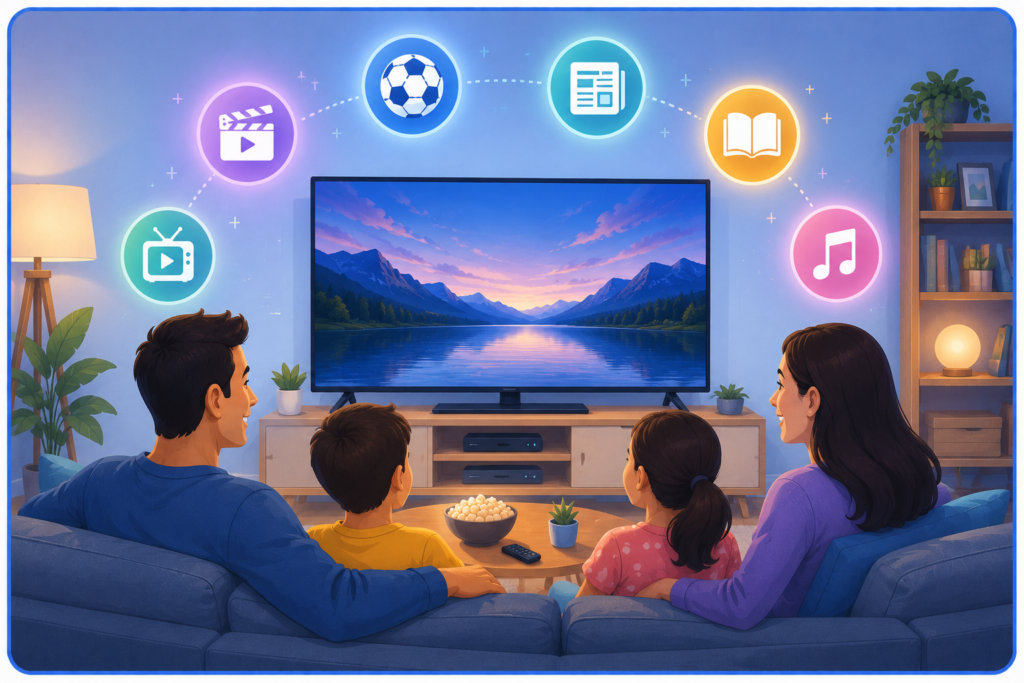
Some common advantages include:
- Access to live television
- Channel-style viewing experience
- Video on Demand options
- Catch-up TV features (where available)
- Works across multiple compatible devices
- Can replace traditional cable viewing for many users
Advantages of Streaming Services
Streaming platforms also offer several benefits:
- Large on-demand content libraries
- Watch anytime
- Personalized recommendations
- Original exclusive content
- Easy search functionality
- Multiple user profiles
- Offline viewing on supported apps
Which One Is Better?
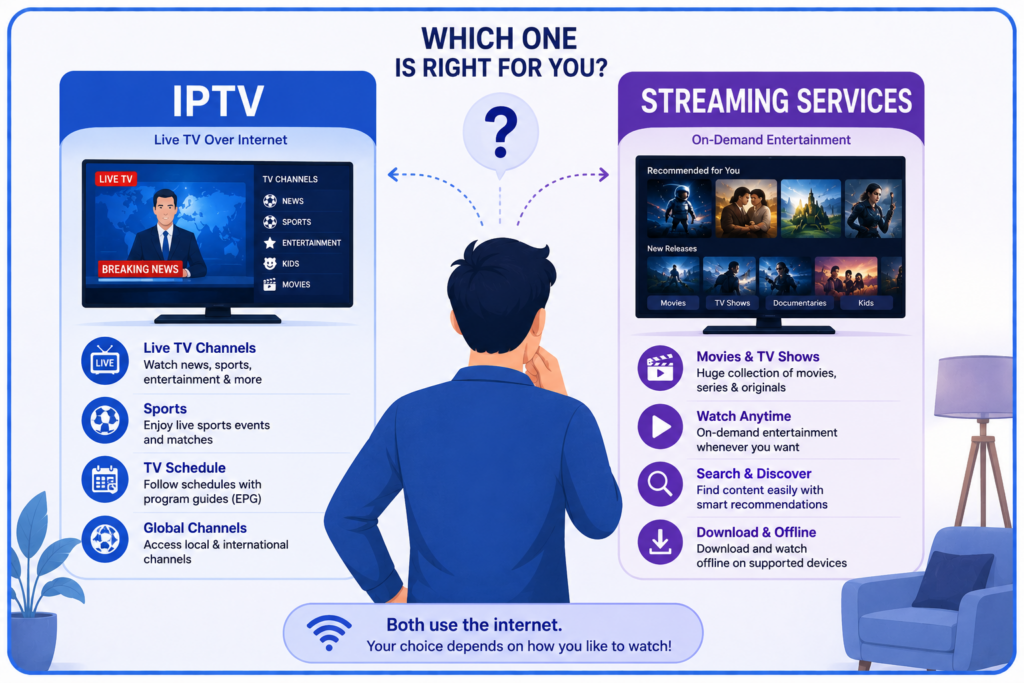
The answer depends on how you like to watch television.
IPTV may be suitable if you:
- Prefer live TV channels
- Watch sports and news regularly
- Enjoy a traditional television experience
- Like channel surfing
Streaming services may be better if you:
- Prefer movies and TV series
- Watch content on your own schedule
- Enjoy binge-watching
- Want personalized recommendations
Many households actually use both technologies together to enjoy live television alongside extensive on-demand entertainment.
Frequently Asked Questions
Is IPTV the same as streaming?
No. IPTV is a method of delivering television over internet protocol networks, while streaming services are platforms that provide on-demand or live digital content over the internet. Although both use internet connectivity, their content delivery models and viewing experiences differ.
Do I need cable for IPTV?
No. IPTV uses an internet connection rather than traditional cable or satellite infrastructure.
Can IPTV and streaming services be used together?
Yes. Many users combine IPTV for live television with streaming platforms for movies, TV shows, documentaries, and other on-demand content.
Which uses more internet data?
Data usage depends mainly on the video quality (SD, HD, Full HD, or 4K) rather than whether you're using IPTV or a streaming service. Higher-resolution video generally consumes more bandwidth.
Final Thoughts
IPTV and streaming services both represent modern ways to enjoy entertainment through the internet, but they serve different purposes.
IPTV is ideal for viewers who enjoy live television, scheduled programming, and a familiar channel-based experience. Streaming services, on the other hand, excel at providing flexible, on-demand access to movies, series, documentaries, and original content.
Understanding these differences can help you choose the option—or combination of options—that best matches your viewing habits and entertainment preferences.